
Decolonizing Artisanal Foods
The Difference Between Craft & Labor in Foodways
By Mennlay Golokeh Aggrey
We have been taught to look at artisanship through its proximity to the colonizer.
Craft in this context is often viewed as slow luxury. It’s manifested in the imagery of small batch olive oil harvests, homemade butter, and perfectly leavened bread sitting on a crisp linen table under the Tuscan sun. It is through the lens of the slow food, slow living movements of tradwives and whitewashed Indigenous crafts made specifically for the consumption of the elite class. Throw in a 2008 hipster backdrop and this is what craft and artisanship have come to conjure.
Culinary analyst and PhD researcher Sophia Lingham explains that our interpretation of what qualifies as artisan foods is tied to the food itself, but also to the producer, their personality, place, beliefs, and perceived formalization of craft. I nod in agreement and would take it a step further to say that artisanship is also shackled to capitalism’s measure of value. Meaning that the value of craft is also perceived by its aesthetics and the social signals that tell us what it is worthy of admiration and consumption. This is where luxury and craft are blended, and labor is sifted out.
What is craft & who gets to be called an artisan?
May I offer you something else: that craft shouldn’t be seen as singularly opulent or luxurious, but also as labor. Artisanship can look like the unaesthetic, arduous labor of deep-toned bodies adorned with jeweled-like beads of sweat. It is a fine skill built on the backs of informal economies and informal Indigenous knowledge systems. Labor and craft can also be innovation—something birthed out of survival and scarcity. Sometimes hurried, the very opposite of slow.
You find this in the recipes and skills you can only study and perfect by the physical act of doing them over and over again. Recipes that can only be understood by tasting a dish repeatedly until your body knows it’s ready.
Take making fufu, for example. The prehistoric, West African yam and plantain staple. Every time I make it, it feels like tapping into a deep artisanal exercise. The skill comes from years of sitting next to my mother doing the laborious work of folding the sticky, mochi-like starch over and over again. She would always hand it to me when her hands got too tired. That’s how I learned; through repetition and the labor of making it. There is artisanal discernment in tasting fufu and immediately knowing when it has been made right. This is craft.
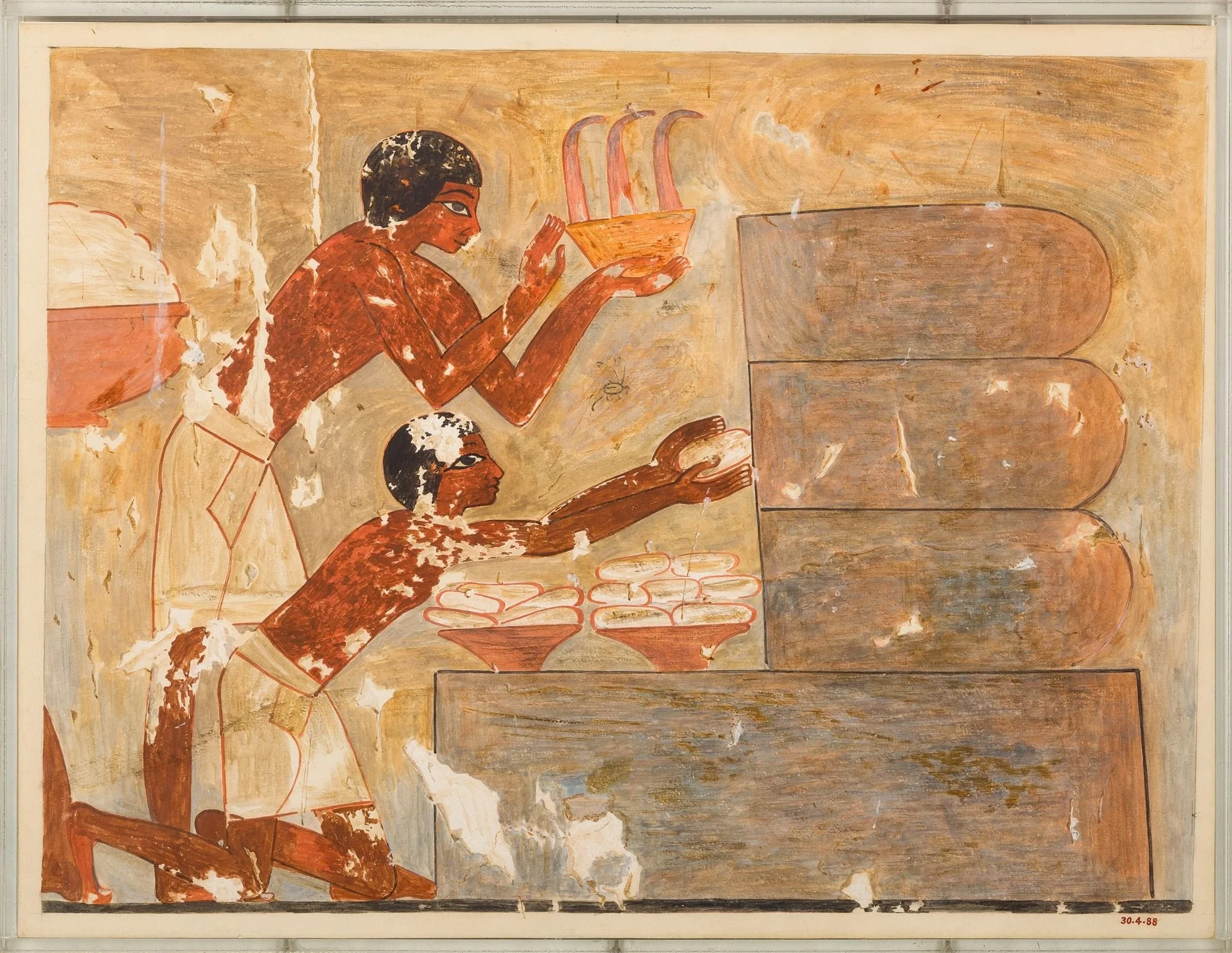
Gathering Honey, Tomb of Rekhmire, by Nina de Garis Davies
This is why it can be so hard for artisans to develop a recipe. We hear this a lot from grandmothers and nonnas and abuelas in the kitchen, “I don’t know how many exact ounces the recipe needs, I just know it when I see it.” Because how do you translate instinct into a 5-step instructional guide? How do you translate the texture in your palms by teaspoons, grams and timers?
Of course recipes serve a purpose, both practical and historical. But what I’m saying is that craft is also part of the inheritance and nostalgia of labor.
I clocked this immediately while attempting to make masa for the first time. The perfect cornmeal base for making tortillas and infladitas, gorditas, sopas, tostadas all seem so easy to prepare and inexpensive to make. Mexican masa, when it’s warm, puffy, or crispy is top tier. Yet while making masa—truly handling it—I could immediately suss out the level of intuitive skill required. The rounding, the flattening, shifting the back and forth between hands with ease. It can demand intricate labor to achieve perfection and that is because it is artisanal.
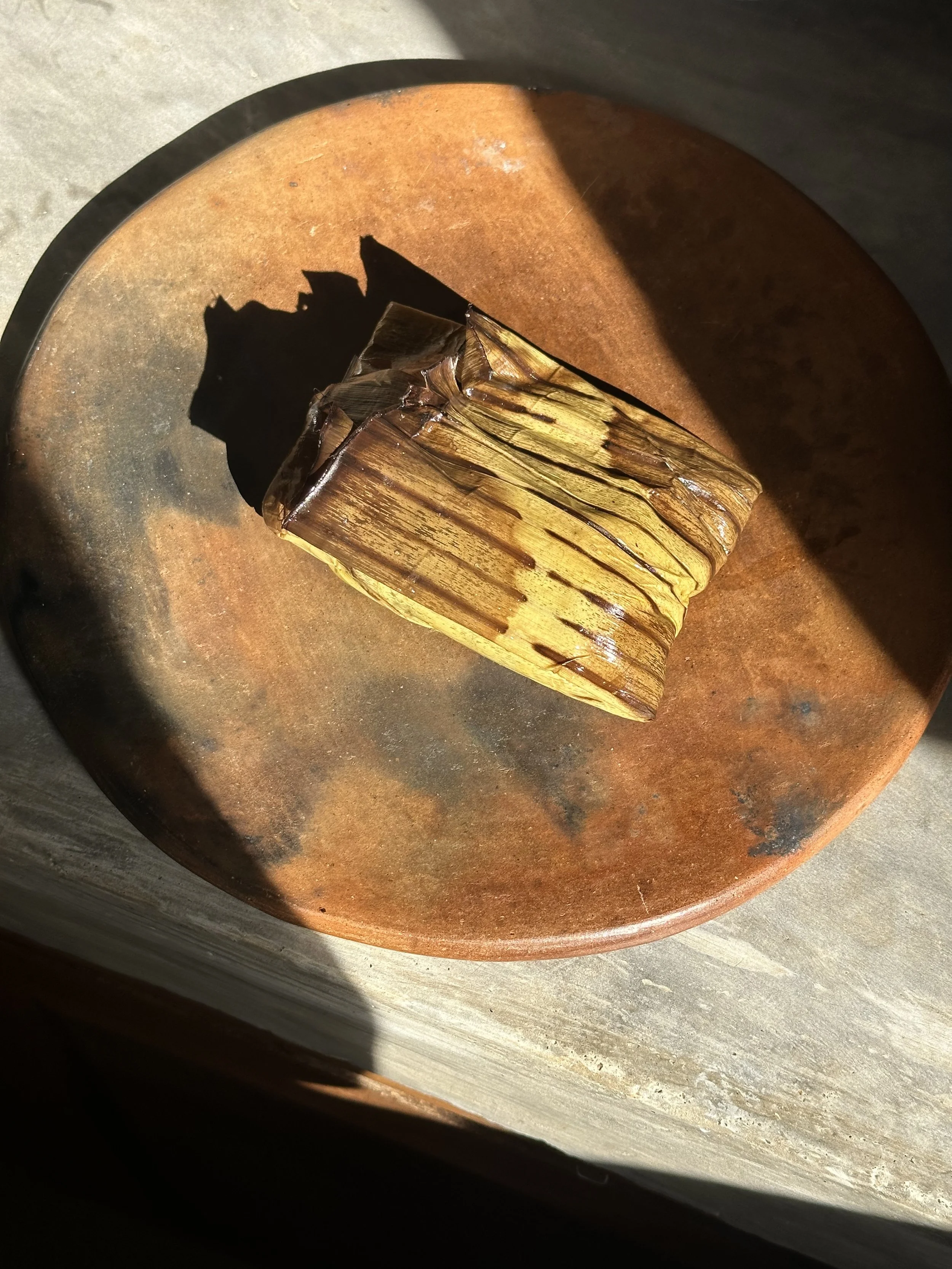
An AfroMexican tamale, coast of Oaxaca, 2024.
Maybe this is what artisanship and craftsmanship looks, feels and tastes like outside of Western frameworks. It is sometimes simple. Sometimes it demands strength. Regardless, it remains an earned and sophisticated skill in its own right.
This is why the work of decolonizing foodways is so pivotal in keeping the historical records of foodways honest, while preserving what history often fails to record. Colonization erases craftsmanship and reclassifies whose craftsmanship is counted.
When I think of AfroMexican cuisine, which is by all means, Mexican cuisine, I recognize how easily reclassification reveals itself. Living in Mexico for twelve years has shown me that some of the nation’s most iconic foodways are some of the least acknowledged. One might look at AfroMexican food through a colonizer’s lens and distill it only to fusion. And while there’s seemingly nothing inherently wrong with this, in doing so we erase the birth of an entire region of gastronomy created by Afrodescendant, Mixtec and Zapotec coastal communities in the 16th century. Born, again, out of surviving, adapting, courtship, preservation, but also refining culinary traditions that are today inseparable from what we call Mexican food.
Consider the labor of carrying rice grains braided into hair from the shores of Angola, Ghana, or Congo, to the shores of Veracruz, Guerrero and Oaxaca. Consider the ancient techniques of incorporating chiles, making tamales de tichinda, peanut-based sauces and stews and the Afromestizo salsa macha. This is what we lose when we separate labor from craft and only see food traditions through a colonial lens.
The labor of decolonization recovers what is lost and forgotten and exalts the practiced hands of the ordinary everyday artisans who have always existed. This is why we decolonize artisanship.