
Bread, Routine and Community
— at Little Sourdough Kitchen
By the time we get to Little Sourdough Kitchen at 6 am, the team has already put out the bread. Anna greets us while she’s laminating the croissant dough. Everyone’s working at their own stations, in a quiet that’s only interrupted by the beeping timers and oven fans. I peek downstairs looking for Ben, who immediately offers us hot coffee. We joke about the universally early call time bakers have to endure their whole career. Depending on what needs to be baked, their in-times can vary anywhere between 1 am to 4 am. No one ever gets used to it and the Little Sourdough Kitchen team affirms.
The top floor at Little Sourdough functions as the storefront. The wooden work benches, laminators and the majority of baking machinery are hidden behind the coffee station, which separates the guests from the bustle of the kitchen. Beyond the espresso machine, the shop is decorated with shelves that hold the bread and custom merchandise.
We get to know each other a little bit more as we head back downstairs so Ben can score the baguettes. I frequently describe myself as a “jack of all trades, but master of none” when people ask me about my career, but he says he can relate, “because doing one thing is boring”. We start rolling the cameras to capture the magic that happens before the doors open.
Text by Ebru Eltemur
Let's talk about the legacy of this place a little bit. What was your approach to preserving that in some ways, but also giving it your own twist?
Anna: What was really great about this bakery is that it had a really big community following. It was easy to come in and vaguely want to maintain that and sort of push the standard while engaging with the customer. I think our approach was to not do it all at once, take it over and bit by bit, change things. listening to customer feedback, and building it like that.
Ben: We are like brother and sister. When we met it felt like we had an instant connection. When you catch that I think it’s important to act on it. We also care equally as much about our work. We share a similar approach to ingredients and hold each other accountable to the same standards they expect of themselves. We never wanted to come in and change everything, we just wanted to find the things that could be improved.
What were some of those new things that you brought in?
A: It's been a mixture of things. One of the biggest things we've changed was some of the flour because we’re focusing on local ingredients. Now we use stone milled flour.
What's your R&D process like together?
B: Because we want everything to be the same standard, nothing really just gets flung out onto the counter. It's very considered, very seasonal. We involve the whole team so we can taste everything and keep trying.
A: We have a calendar in which we plan for the next few months so we’ll regularly sit down, discuss, and see what's in the season. Then when it comes into season, we test it and have everyone taste it. We tweak it, then it obviously has to go through the horrible process of being costed. Only once that's done that it's able to go out on the counter.
The previous owners were Italian, and their focus was very much Italian bread and pastry. You’ve come in and changed some of the grains you use, now it's a little bit more English. What has that meant for both of you?
B: I was previously at Farro in Bristol, which was heavily focused on grain. We had our own new American mill, and I wanted to impart some of that here. Whilst we don't want to make our own flour 100%, we work with local suppliers like Henry Astor of Bruern Farms based in Oxfordshire. We also recently started using Gilchesters based in Northumberland. The grain itself has so much flavor and nutritional value which is preserved by stone milling.
A: I actually come from a chef background. I've worked for most of my career in British restaurants with seasonal menus. That's where my love comes from. We didn't want to ignore the history of the bakery. We've introduced items like focaccia, but we use English flour. We make the tiramisu using all English dairy. We still make the pizza dough people go crazy for.
That's such a specific product to have at a bakery.
A: Yeah, it’s very niche, but people love it.
How did you incorporate your British culinary background further into the bakery?
B: We put a lot of focus on our suppliers, where we we’re getting the dairy and grain from. I've worked in the industry for over 12 years and I try to work closely with people that share a similar passion for their craft as I do my own.
A: For produce we work a lot with Shrub and Flourish. Shrub locates small, independent farms across the country and works very closely with them. These farms are usually micro plots. At Flourish, they farm the produce themselves, and they only grow things that biologically compliment each other. They will only harvest things if it’s being ordered. So we’re very much focusing on the thought alongside the product we produce.
B: It keeps it exciting for us because we can build our menu around that. We have to be able to adapt to different batches of flour coming in. It just puts more emphasis on the skill and intuition of the baker.
Looking at the reverse side, has working with any of these people changed the way you approach your recipe development, as you met new suppliers throughout this process?
A: I think we both worked with most of these suppliers beforehand in previous jobs. They're very inspiring and they're very good at introducing us to new ingredients. It makes us think outside the box as a two sided relationship.
B: A lot is often lost in places where you don't have that connection between what is being made and where you're getting the product.
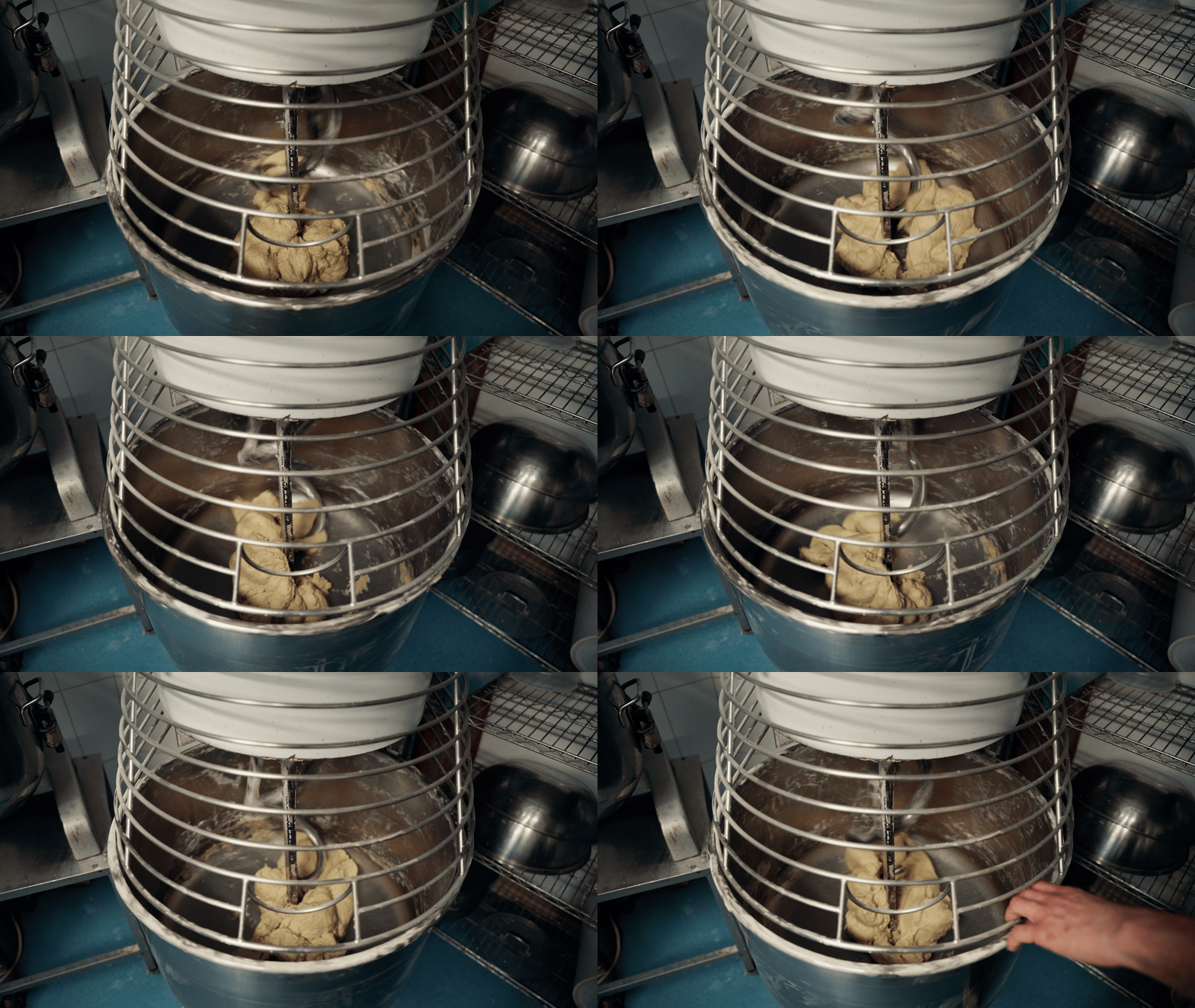
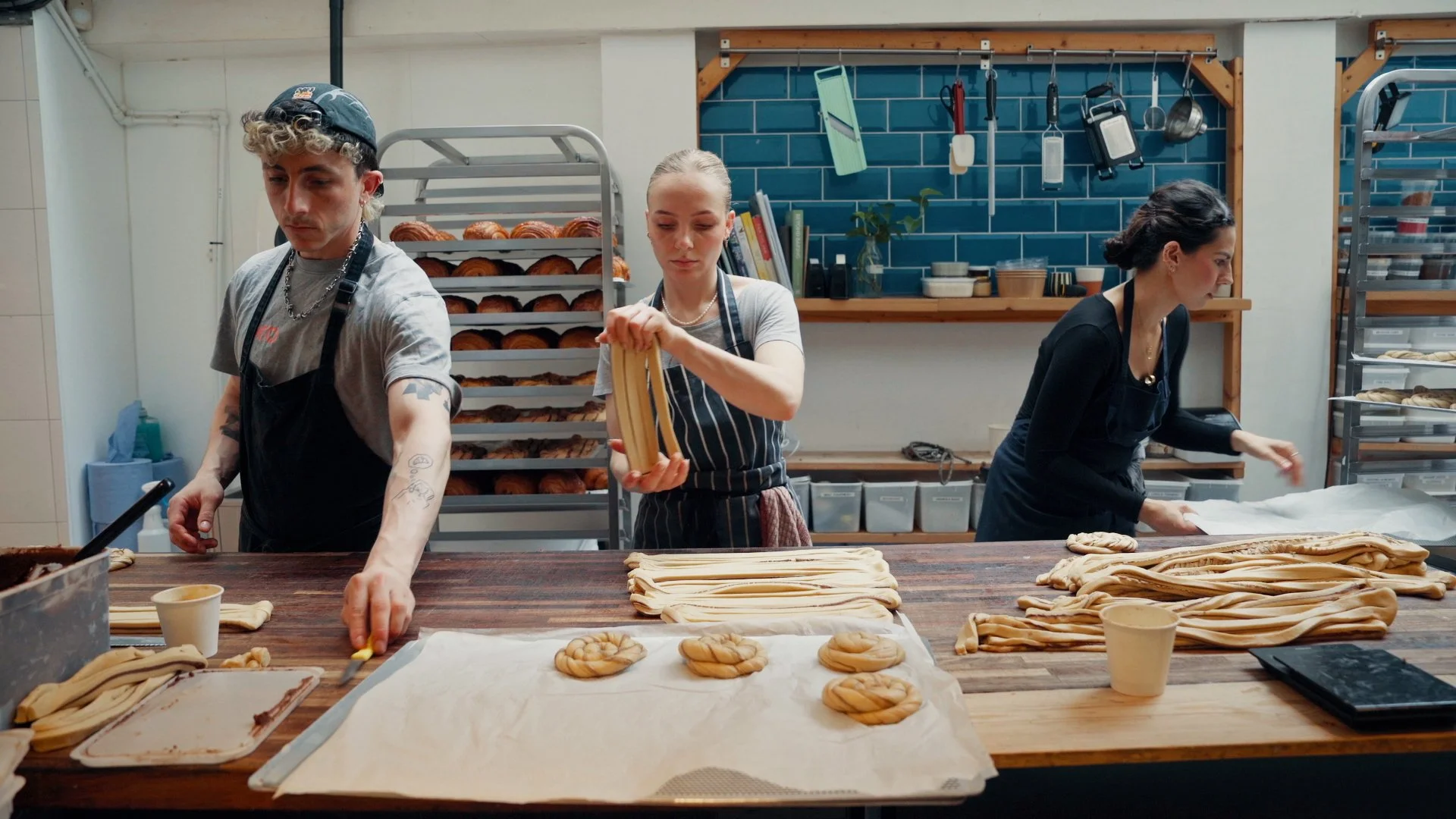
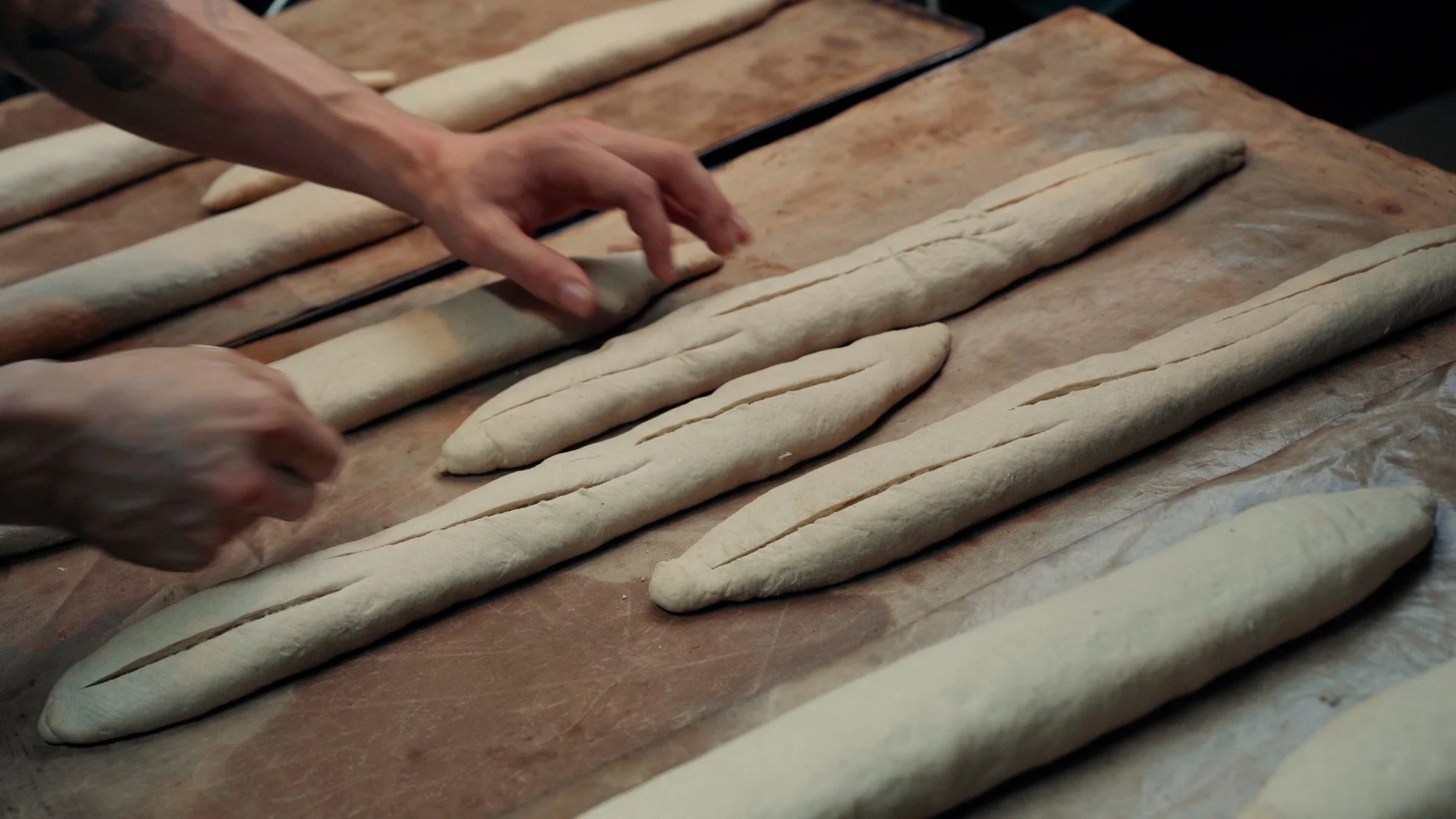
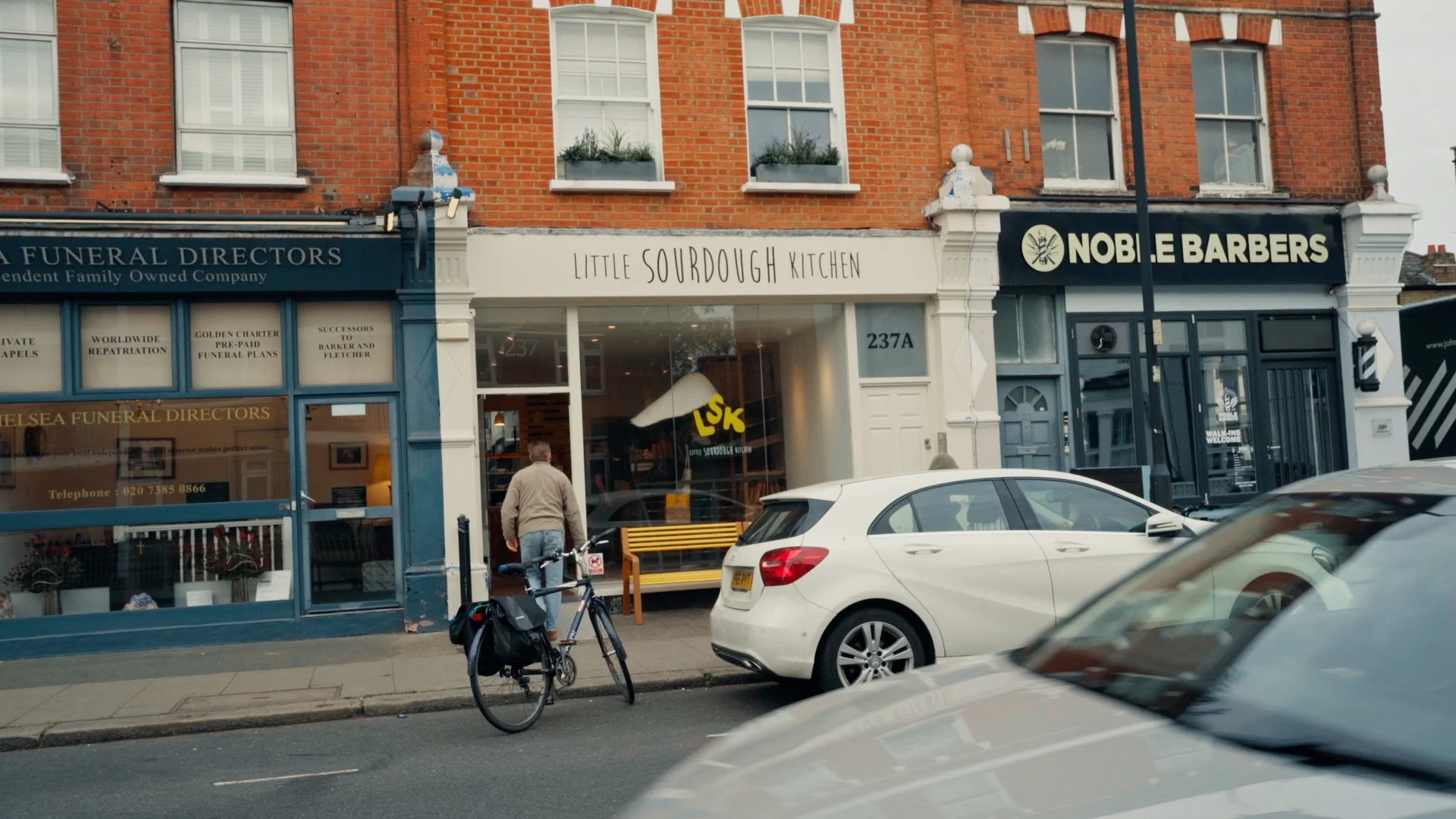
A lot of people don't know that almost anything at a bakery is a multi-day process. They forget that bread, pastries, all of those things take so much time to make. Do you have any fears about having to limit what you can experiment with in terms of the cost?
B: We’re quite realistic about what we can make and sell. We don't mind getting a crazy expensive ingredient, we don't have to charge the customer an astronomical amount. That's why working seasonally, working locally helps us manage those margins and keep things at a price point that people can buy.
A: We also try to shape the menu so that it balances out the more expensive products that we often then lose a bit of money on or not make as much. We have lower cost products that help cover that loss.
B: We always want to keep doing interesting things, so it’s all about checks and balances to sustain that.
And that also reduces your waste in so many ways, right? Because you know your demand, you are here every day. You're producing every day so you have a better understanding of what is needed.
A: Our waste is something we’re really conscious of on many levels. We repurpose almost everything.
B: We have near zero food waste from the croissants because all the trim goes back into the bun doughs, any other trim gets chopped up into monkey bread.
We speak about their croissant chips as well. Apparently they have to make extra croissants for those now because there’s so much demand. The Little Sourdough team also gives any products they couldn’t sell before the shop closes to an old people’s home. Though their donations are done informally, it’s on a regular basis.
There has been such a huge boom of bakeries in London and clearly there's a demand for it too. Is there friendly competition?
B: It’s a very small community, where everyone knows each other almost. I wouldn't say there’s as much competition as there's support for each other. I always go to friend’s bakeries and try their stuff, we chat about our own products.
A: I really haven’t felt any competition. I think London is such a big space that there is space for each bakery. I live in Angel, and there's seven bakeries. Each is so unique in the sense that they observe what others are doing, but carve their own path.
Your bakery means so much to its own neighborhood, Fulham. There's a whole Reddit thread about the time you closed down for renovations. People didn’t understand that it was gonna be open and they were so devastated. Some neighbors were die-hard fans.
A: I think the hard thing was that, because obviously when a sale happens, you can't publicly announce such a thing, and then when it's complete, the change is immediate. So none of the customers were aware of it prior to it. It was an intense change for them because the previous owner was involved in the day-to-day too. As we explained it more and more, when we were able to post on social media and get the word out - people started to wave to come in and meet us and that really helped.
Besides its literal meaning of not being tied to a franchise or owned by a large company, what does being an independent bakery mean to both of you?
B: For me, at the heart of it is the connection with the customers, because we would be nothing without the people who come here day to day, and that's so important. Maintaining that is just essential to me.
A: I completely agree. I think the customers, one side, and then the production. If you're independent, it’s very much a day to day operation, everything’s done fresh and by us. I don't want that to ever change.
I try to get some details out of Anna and Ben on Little Sourdough’s future plans. They are giddy about the possibility of a second location. While they don’t plan on expanding at a crazy rate, they want to use the second location to flex their creative muscle and experiment more, and increase production. Ben explains that they are maxed out on production at the Fulham location. At this new site, the team would be able to produce more croissants, more bread and exciting pastries. Ben and Anna hope to design the space to be more customer-facing, so they can finally offer baking classes to their community.
*As this piece was being finalized, the LSK team let us know that Anna will be leaving the bakery in July 2026, closing one chapter and stepping into another.
I tell them about the monopoly Baldor has over New York. Baldor provides almost every single restaurant and bakery in New York, you can see its trucks at any given location in the city. Part of sustaining that monopoly comes from chefs trying to find the cheapest, largest quantity they can order for one ingredient.
Ben shares that the lady who runs Shrub lives down the road - that is how close their connections are. They frequently have conversations with their providers about what they're looking for, what to prioritize - turning it into a symbiotic relationship.
What about dairy and chocolate? Both are getting more expensive by the day, especially due to politics and rising costs around the globe. How has that affected business?
A: I think a lot of it's expected, but it doesn't change how painful it is, because we've talked about this so much. We operate on such tight margins as it is. I know when I go somewhere and am charged £6 for a loaf, it makes you think that's a lot of money. But it's something you have to do to make money, if you want to pay the people who are making it.
B: When you break it down, what you're actually left with is a bad deal, and it's not a huge amount. Whilst it sounds like a lot, it’s really not.
A: This baker from Hart was speaking about people casually dropping seven plus pounds on a pint, but feeling outraged at spending that amount for local bread that will feed you for several meals. There is just so much love and care that goes into these products. They should be celebrated and acknowledged. I do think there was a phase ten years ago, in which chains were everywhere and all the pricing dropped. Everything was getting cheaper, but the product was getting worse and the connection was lost.