
Craft and Continuity
—A Symbiotic Relationship
Text by Ebru Eltemur
Photography by Güney Aygüner
Balıkesir, a city on the Aegean coast of Türkiye, has been globally recognized for its culinary heritage in the cheesemaking industry. Ayvalik and Cunda are home to some of the oldest dairies that have built this legacy. For the short amount of time we get to spend in town, Chef Fahri Ateşoğlu agrees to be our guide. Ateşoğlu spent a majority of his formative years in Ayvalık, where he went to a vocational high school and graduated from the culinary department. After graduation, he moved to Istanbul to take a career leap and it worked out. He has worked in some of Istanbul’s most awarded kitchens, including Mikla, Nicole and TURK, and now lives and works in New York City.
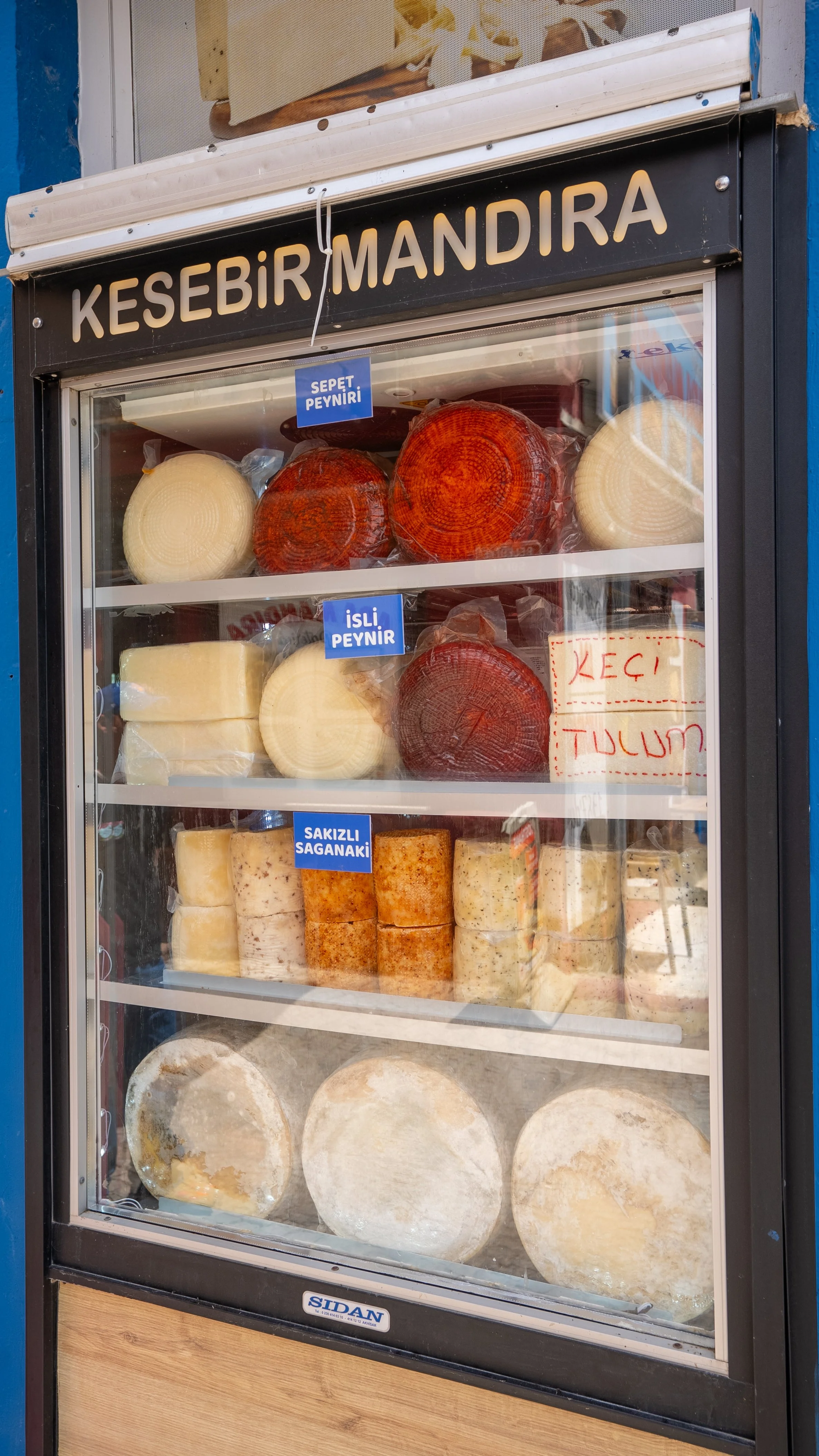
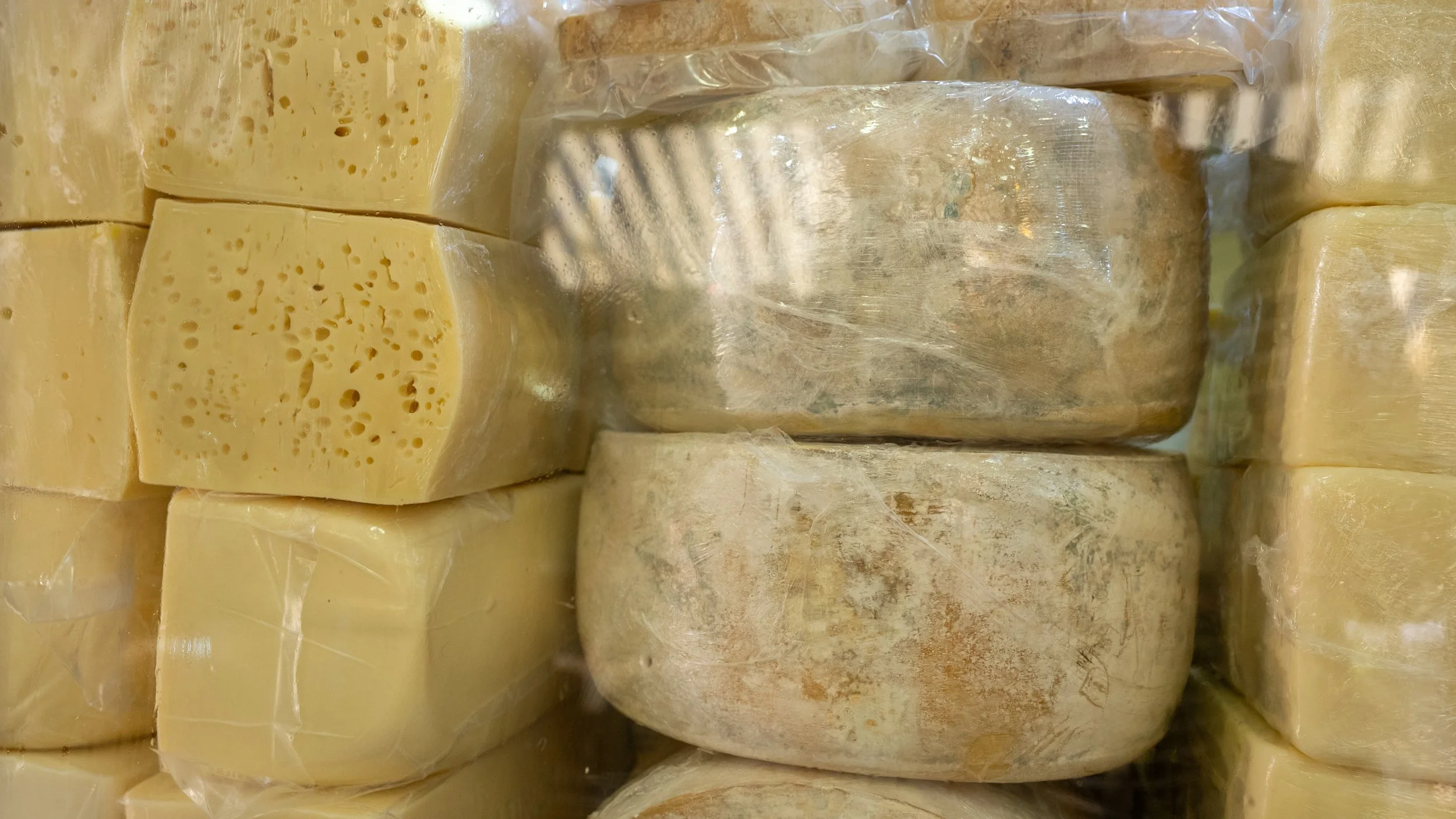
As we approach the shop, Ateşoğlu describes what to expect “At Kesebir Dairy, the customer crowds never die down. This cheese cannot be found elsewhere — just one shop and no distribution.”. While it is not the oldest running dairy in town, it is the more widely recognized company due to the sheer variety of cheese they produce. The dairy was founded in 1993 by Ismail Kesebir, who learned how to make cheese from scratch from an 81 year old elder.
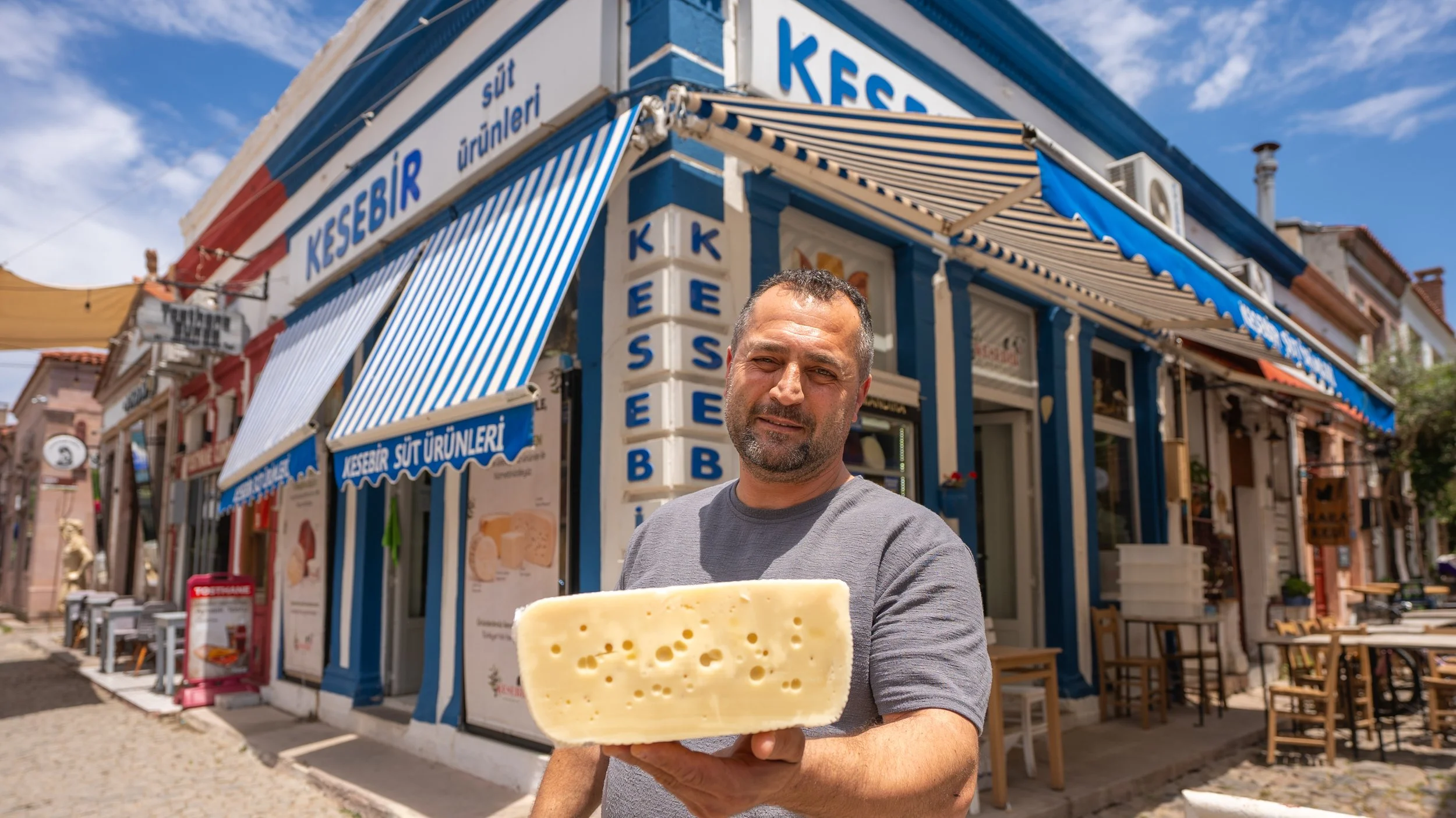
What sets Kesebir aside is its commitment to the uniqueness that comes from craft knowledge and attention to detail. By producing smaller batches, the cheesemongers are able to keep the quality up to the same standards every time. Only the boiling procedure is completed using machines. The rest — molding, shaping, maturation are all done by hand. Each wheel, tin and box of cheese is checked one by one before claiming its space in the shop fridge. The products are not sold outside of the shop. The current owner Hüsnü, in the footsteps of his father, refuses to do wholesale, if it means sacrificing the standard they’ve kept for over four decades.
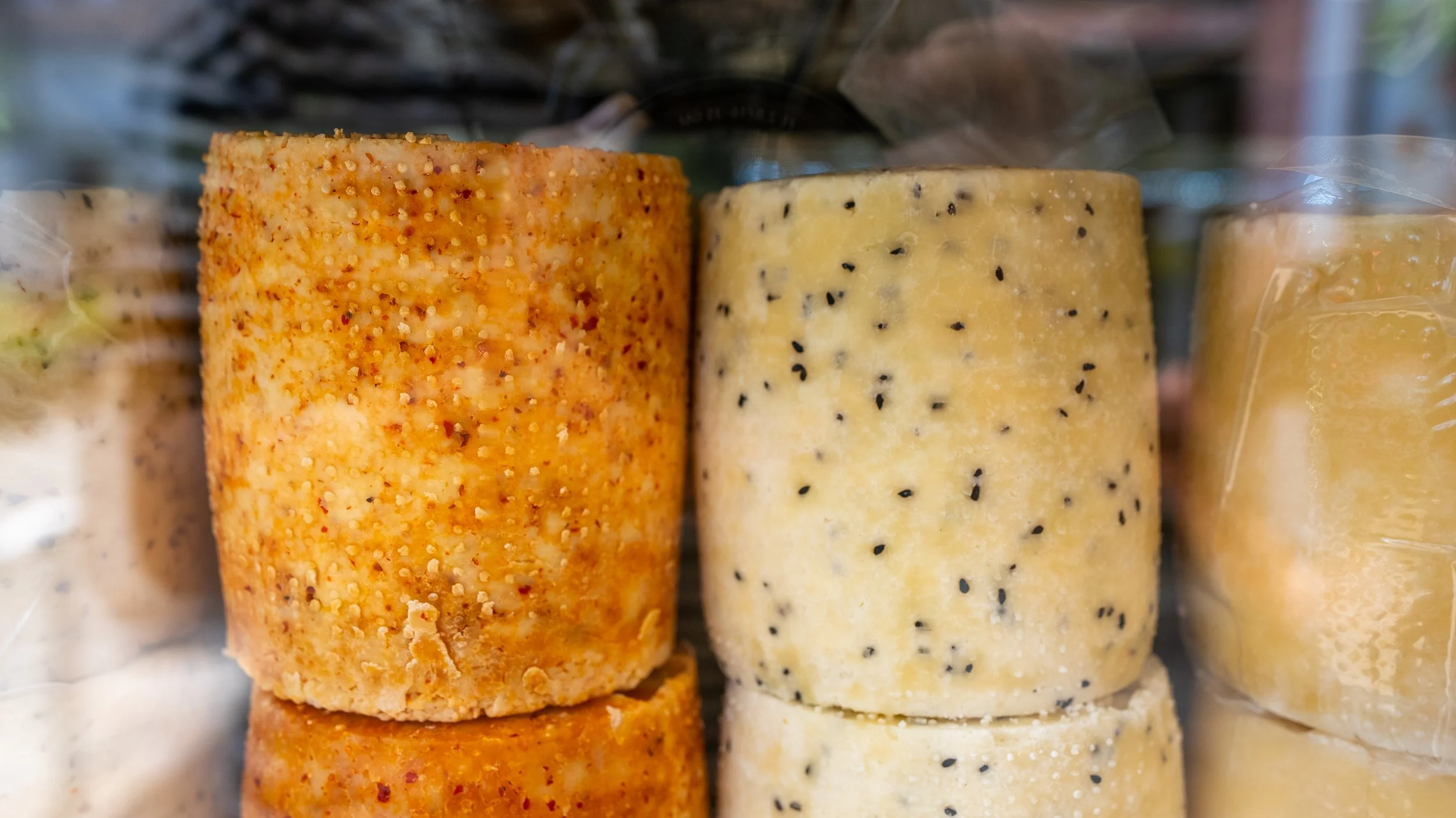
Chef Ateşoğlu recommends that we try one of Kesebir’s signature cheeses, “The dairy is very well known and awarded for its Saganaki cheese, it’s actually Greek and was made famous on the Aegean islands. It made its way to Cunda through Lesbos Island, where it’s popularly pan fried and consumed as an appetizer”. Now, Kesebir produces nearly a dozen different varieties of this cheese, one being the Mastic Saganaki they got patented a couple of years ago.
In a way, Kesebir is a symbol of the vast culinary knowledge that this region holds. They are a vault of vocational knowledge, only opened to those who care enough to put their labor and creativity into the process. It is also a representation of the symbiotic relationship between limitation, skill and continuity. In a world that treasures overgrowth and expansion, staying small may sometimes be perceived as failure. Places like Kesebir prove that limitation can be one of the secret ingredients to a perfect recipe.