
By Zuri Camille de Souza
In my mind, the warmth of the sun is flavoured with salt, chilies and lemon juice.
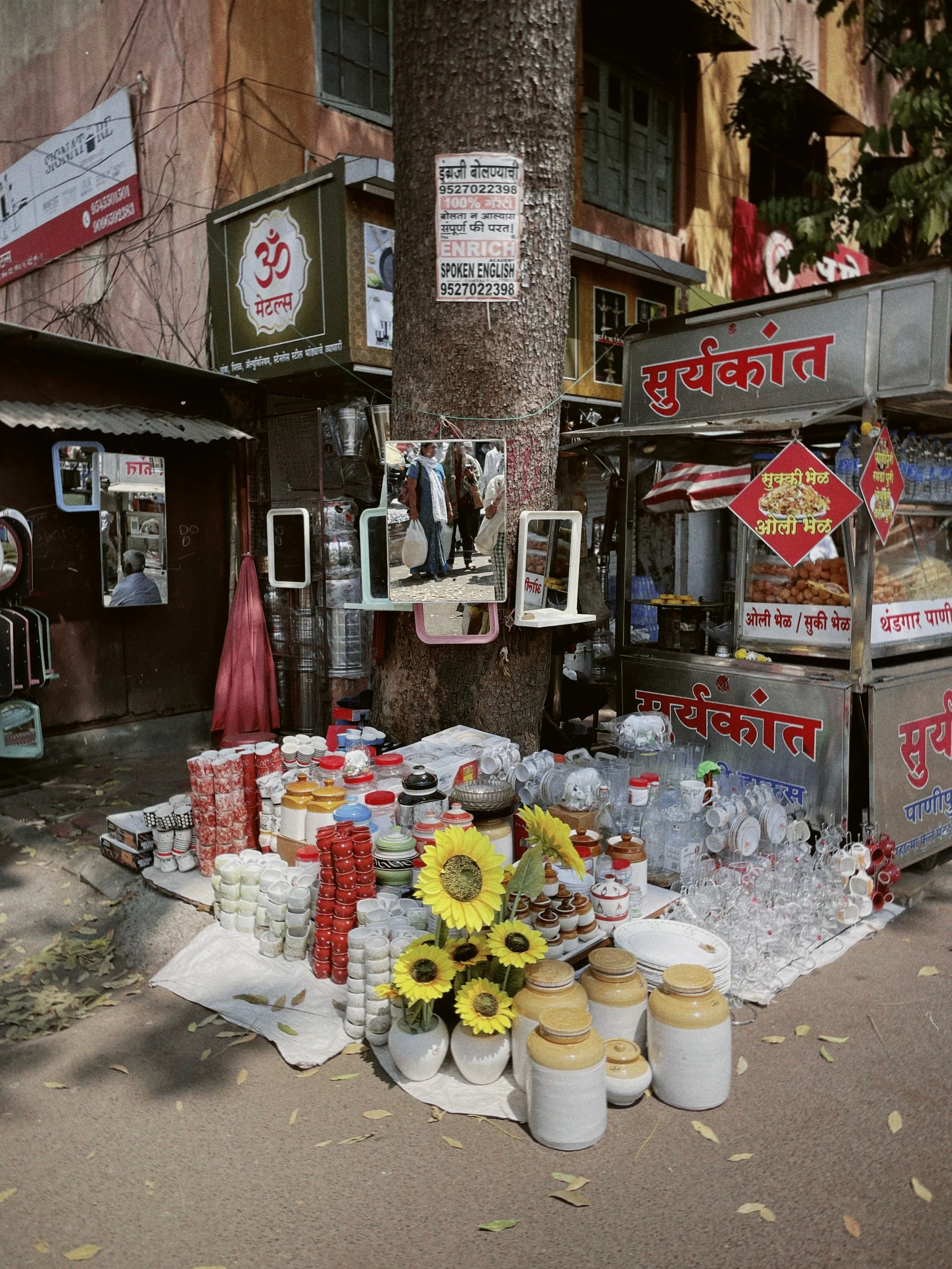
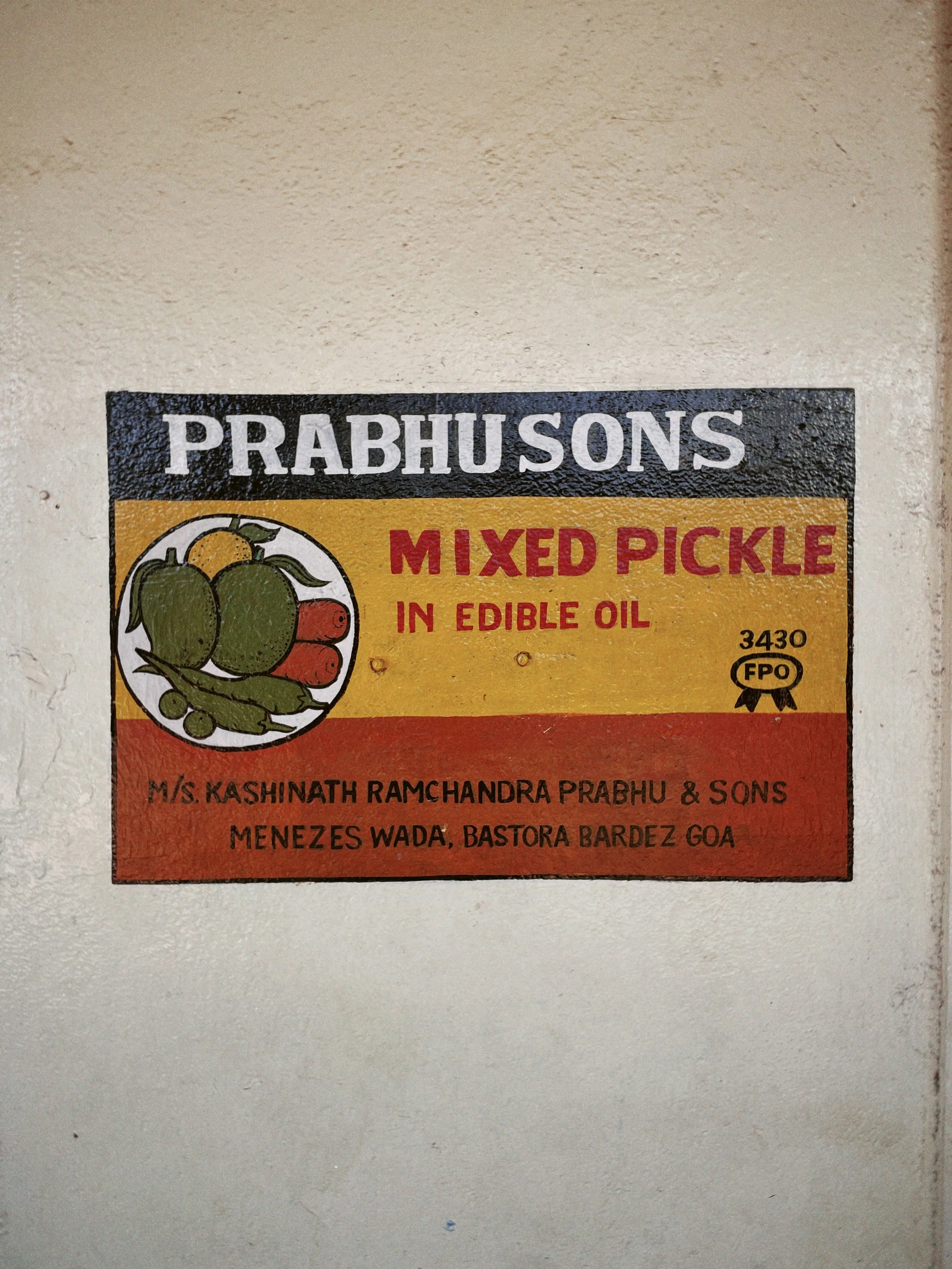
I have recently developed a fascination for pickles. They speak to me because their pungent existences leave no room for homogeneity, instead acknowledging diverse terroirs, culinary histories and a complexity of flavours that confront palates over-simplified by industrialised food. Pickles have the ability to transform even the simplest dishes into something deeply personal, putting into relation ecology, and ethnography through each mouthful, and allowing for the same meal to be eaten through varying cultural lenses, depending on the type of pickle chosen—the experience of eating a plate of dal and rice can completely change if eaten with a sweet gujarati mango chunda as opposed to a coorgi pork pickle. It isn’t a surprise that so often, South Asians carry them when leaving the country, tightly wrapped in plastic, newspaper and towels to avoid oily leaks and masala smears on their belongings. A jar of lontse or thokku contains the sunlight and the warmth of the terrace or windowsill on which it was left to mature, as well as traces of the hands that sliced or grated each fruit or vegetable, chose the tempering mix, filled carefully cleaned jars with the freshly-made batch of pickles, shaking the preparations each day for several weeks until mixture is broken down into a delightfully vibrant condiment. Pickle recipes are often ancestral and carrying them forth is a way of grounding, anchoring oneself in a new land.
It seems pertinent then, that one of the recipes remaining from culinary cultures of indentured labourers brought from India to the Reunion Island in the 19th century was, in fact, a recipe for South Asian pickle.
Aachar, or, aachard de legumes, as it is called in the Reunion Island today, made its way across the Indian Ocean along with the workers fleeing economic hardship in India to work on sugarcane plantations after traditional slavery was abolished by France in 1848, only to be reintroduced legally as forced labour. Coming from a family that has travelled across multiple countries and growing up with their stories of voyaging in a pre-smartphone, pre-internet era in the 1960s, I often wonder what it must have been like for the people that were taken from India a century earlier, crossing the ‘kala paani’, dark water, their name for the ocean, for the first time on large wooden ships. What must it have felt like to come across a familiar fruit or a vegetable for the first time? To realise that a recipe from home could be made on this island?
Working as a chef in the south of France for the past eight years, the question of what I left behind—unwillingly or not—is a question that often comes to mind when I cook. Certain ingredients, flavours and techniques seem to have made their way back into my meals after a long time away—millets, ancient rice varieties, more intentional ways of working with the seasonality of spices, and ways of serving food that aren’t restricted to one dish on one plate only. I find that being far from home has, in fact, brought me closer to the things I deeply value and enjoy eating and that I had perhaps intentionally forgotten, wanting instead to conform to a certain dominant style of cuisine present here in Marseille. While I never felt like my traditional food heritages were of less importance, comments like ‘rice is such a staff meal ingredient’ made me feel like the recipes I knew how to cook were not as valuable in a professional environment, especially in comparison to the norms set by the Nouvelle Cuisine-inspired food currently cooked in France. I wonder if the growing acceptance that we can inhabit multiple identities, that we don’t need to draw a line or justify plurality, has also made me feel secure enough to retrieve intentionally forgotten foods without the confrontation of judgement or a sense of belittling.
Living away from home has also pushed me to engage with the tricky question of where I come from because I am constantly being asked to define myself, something that has been a source of confusion for both me and my brother, even while growing up in India. Born into a family of diverse origins, our identity has never been easy to codify along the unfortunate communal lines that structure Indian society. Food is a meeting point for both our paternal and maternal sides that share ties to the Maharashtra and Goa coasts and the east coast of Africa. This plurality was embraced and accepted without contestation at home and has defined who I am, how I ate growing up and what I cook now.
I came across the term ‘creolization’¹ whilst reading Edouard Glissant’s Soleil de la Conscience. What struck me was the powerful, deeply conscious disregard for conventional language codes, as well as the interpretation of cultural encounters as a space of movement; ideological intentions that I seek to cultivate within my cooking because they allow me to embrace both what I have newly learnt and what I have lived as part of my culinary lexicon. I consider my practice, as a chef, rhizomatic — branching out between different geographic and cultural spaces that are present within my life – layering, connecting and acknowledging. Unlike a root that pulls out and extracts, a rhizomatic approach to my past provides me with a framework within which to improvise and understand, rather than transpose and appropriate recipes in a performative way.
However, reclaiming a cultural identity that exists in a space of créolization disturbs the gaze with which I am often confronted. One that expects my practice to conform to a neocolonial understanding of India, often transforming prejudices and pre-existing culinary hegemonies into a reductive projection of ‘Indian culture’. One that is founded on ill-informed discourse about immigrants based on dominant Hindutva tropes that strive to market a certain image of India to the Global North.
This spring, I found myself unable to counter these gazes whilst on a chef residency in Arles, when an older white lady—the symbolic straw that did indeed break my back—came over to the kitchen as I was cooking and said that my food didn’t resemble the meals she ate whilst on a two-week holiday to Goa². I found myself unable to respond, disturbed by the ease with which my food, my self, my memories, and my family history were being rendered invalid.
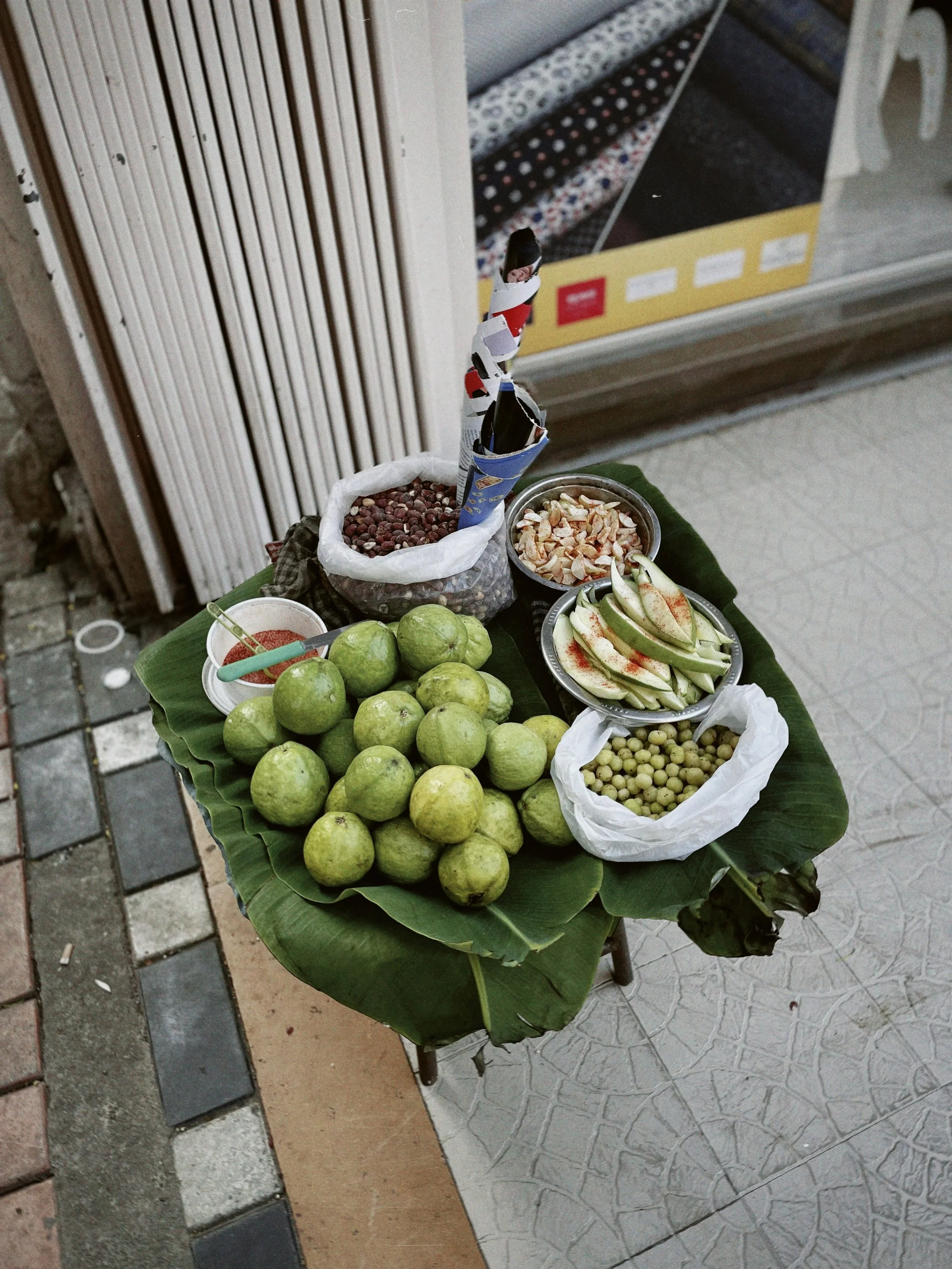
A few days later, I was at the weekly market in Arles. It is known for its beautiful produce, but also for how early one needs to go in order to procure special finds, like dainty bouquets of nasturtiums, pineapple-flavored sage leaves and purple Japanese eggplants.
On this particular morning, although happy to begin the day surrounded by vegetables and fruits, shuffling along besides busy shoppers pulling cane trolleys on wheels, stands heaped with provencal olives, North African semolina bread, goat cheese and other delights, I was also hungry and tired, preoccupied with last night’s dinner service. It takes courage, strength and infinite energy to refrain from questioning one’s culinary capacities when faced by copious amounts of judgement from a wealthy and white clientele. I asked myself repeatedly whether I should just cook what people want to eat — Mediterranean influences, large amounts of animal protein, and enough gels, crackers, decanted liquids, crumbles and reductions that make people feel like they are eating something prepared by a “chef”. I think of writers deconstructing dominant or colonial languages in acts of re-appropriation, and come back once again to the notion of créolization in the kitchen.
As I stood in front of the little white caravan painted with a sign—« Spécialités et Plats Cuisinés de La Reunion et Madagascar » in black cursive against a bright tropical background, what caught my attention besides the dal vadas³ were actually the three glass jars standing side by side on the metal counter; one filled with bright red scotch bonnet paste, one with preserved green limes and another with preserved yellow lemons.
There is no fluff or sparkle here, just food that has been cooked with intention. Taking in the smells of toasted coconut and roasted spices ground into curry pastes, tiny samosas folded into perfect triangles, piles of sizzling accras and beignets, I can see the work put into each preparation.
As I reach for the condiments to dip the dal vadas into, I feel instantly comforted by the preserved lemons and chillies that could have been served out of the jars sitting on our kitchen window at home in India. As far as I can remember, we have always had all sorts of pickles at home—these aren’t pickles in the sense of cornichons or gherkins, but South Asian preserves, in which fruits and vegetables seasoned in a blend of sizzling oil and spices and salt, sometimes sugar too. Whilst my father delighted in buying the more niche varieties—spicy fermented pork from the north east of India, pungent salted Bombay Duck⁴ in red chilly paste or stuffed hog plums—my favourite has always been the one he made at home in a repurposed jar filled with coarse sea salt. We packed all the limes used in the kitchen; a simple lactoferment, that turns the pressed lemon skins into a dark translucent brown, coagulates the pectin into a jammy gel that gives a complex taste that makes me salivate as I write. The same condiment that I was now relishing along for breakfast in Arles.
Pickles are something one reaches for when the pantry is empty—plain rice or a millet bhakri, leftover dal or a fried egg, all become exciting when accompanied by a spoonful of whichever kind. Pickles reach out to me, rhizomatic and spontaneous, asking for company; they hold one hand towards home on the West coast of India, and one hand towards the Reunionnaise woman in front of me, acknowledging a shared cultural history that goes back a century.
Mind cleared by the flavors, inspired by the food I have eaten, I think of Edouard Glissant’s poignant reflection on the archipelagic notion of culture: “Or aux Antilles, d’où je viens, on peut dire qu’un peuple positivement se construit. Né d’un bouillon de cultures, dans ce laboratoire dont chaque table est une île, voici une synthèse de races, de mœurs, de savoirs, mais qui tend vers son unité propre”.
FOOTNOTES
The search for a theoretical framework that acknowledged the specificity of new cultural evolutions led me to writings from the Caribbean. In addition to the fact that my mother spent a part of her childhood in Trinidad, the South Asian and Caribbean islands share complex histories that are vividly expressed through music and food cultures.
Goa is my place of birth and a source of deep inspiration for me.
Typical snacks in south india: fried bites of yellow lentils, curry leaves, sliced green chilly, red onions and spices, often served with a coconut chutney
A type of fish