

The Beauty of
Controlled
Chaos
Looking Back At A Decade of Mokonuts
By Ebru Eltemur
Photography by Lily Watkin
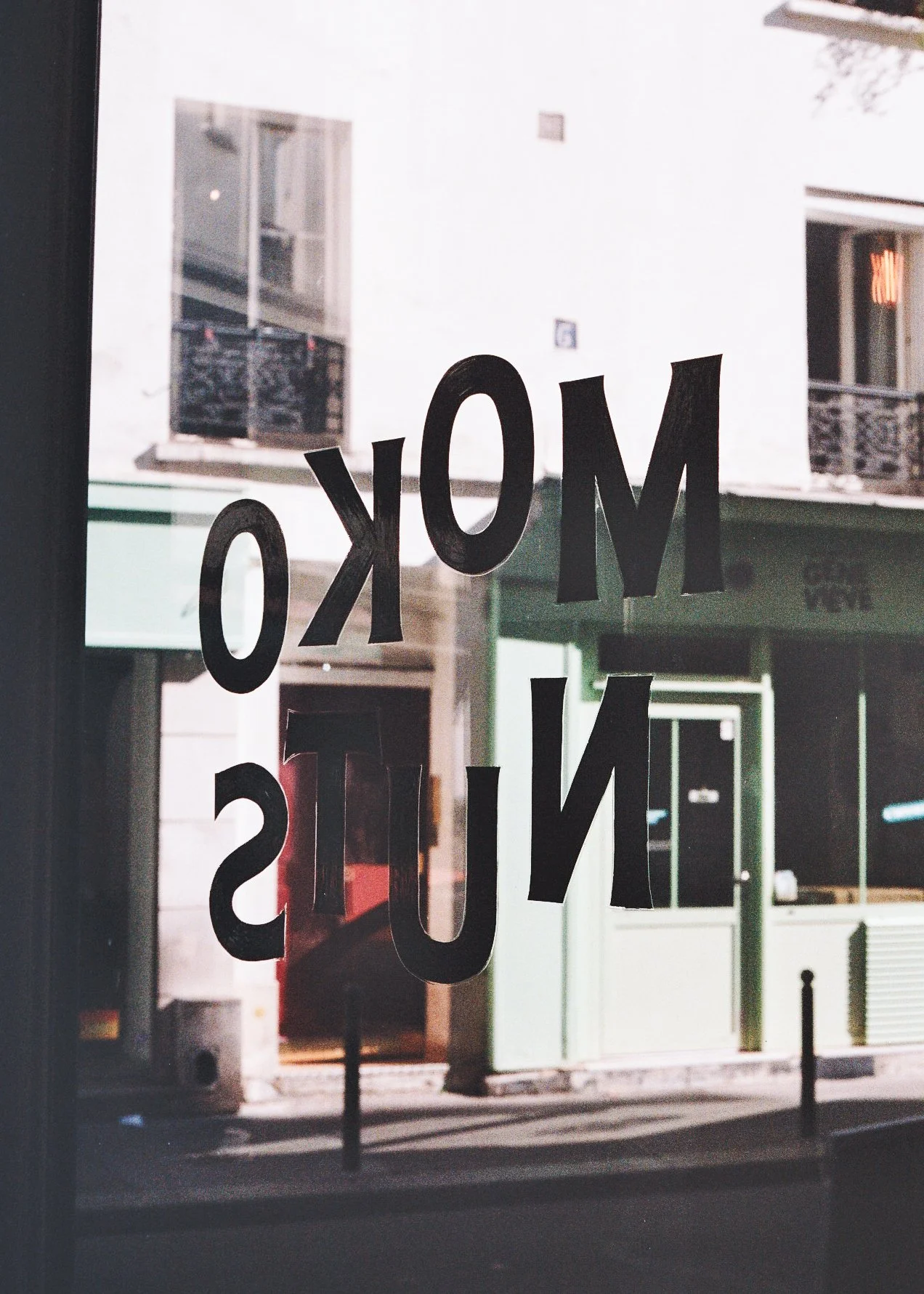
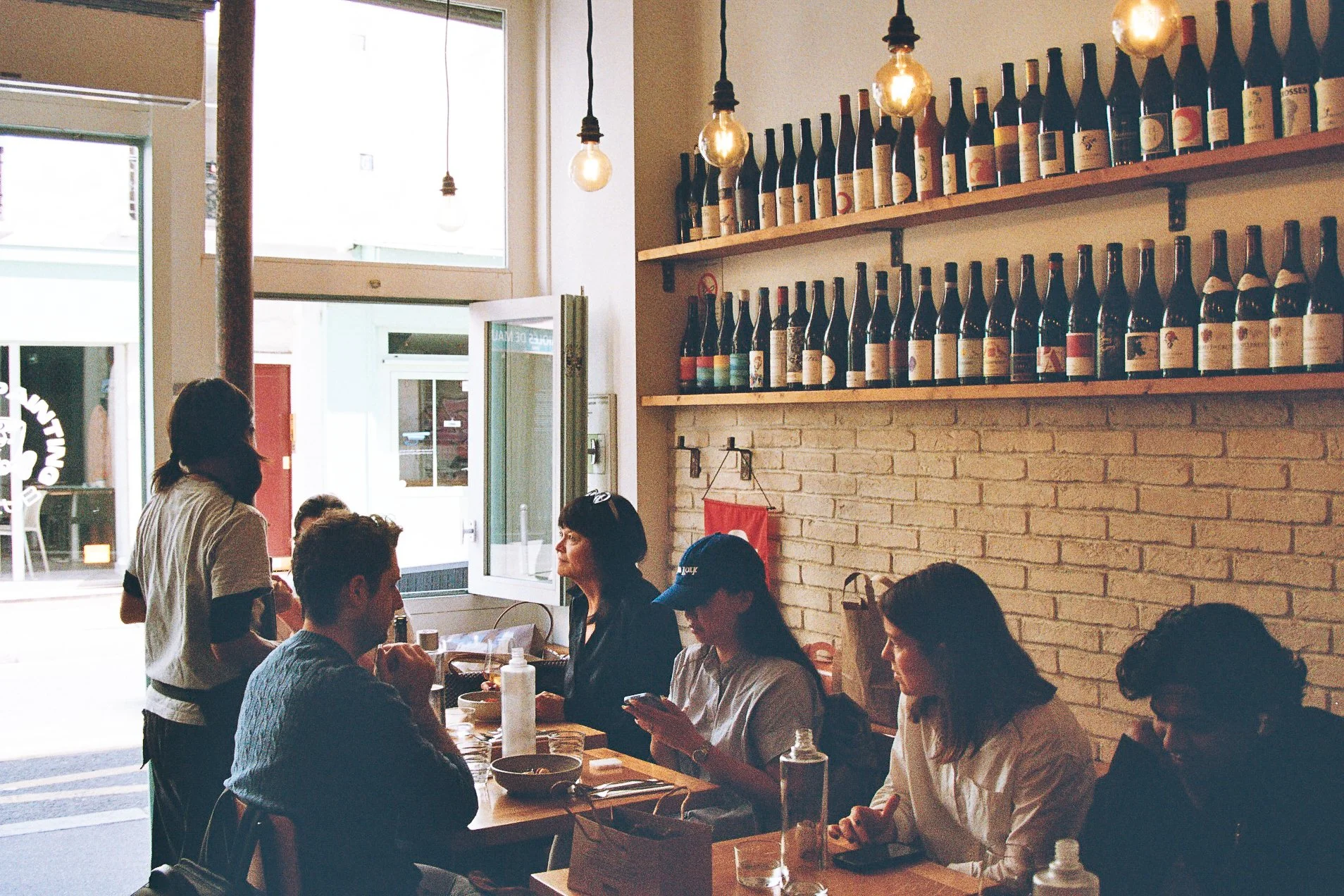
It is rare nowadays, to walk into a restaurant and not be greeted by the physical presence of a large pedestal and an iPad with a reservation system on it. Unless you are dining at a mom-and-pop shop, you are certainly expected to follow along and participate in the choreography of a tightly managed dining room. A space that desires to disrupt that type of dining experience lets the menu take center stage. Time passes faster than usual, with the anticipation of each course. Your experience isn’t dependent on the interior design, the service, the music, or any element that doesn’t involve cooking – it only depends on whether your food tastes good or not. In the social media age, this type of interference exists only in a small amount of restaurants.
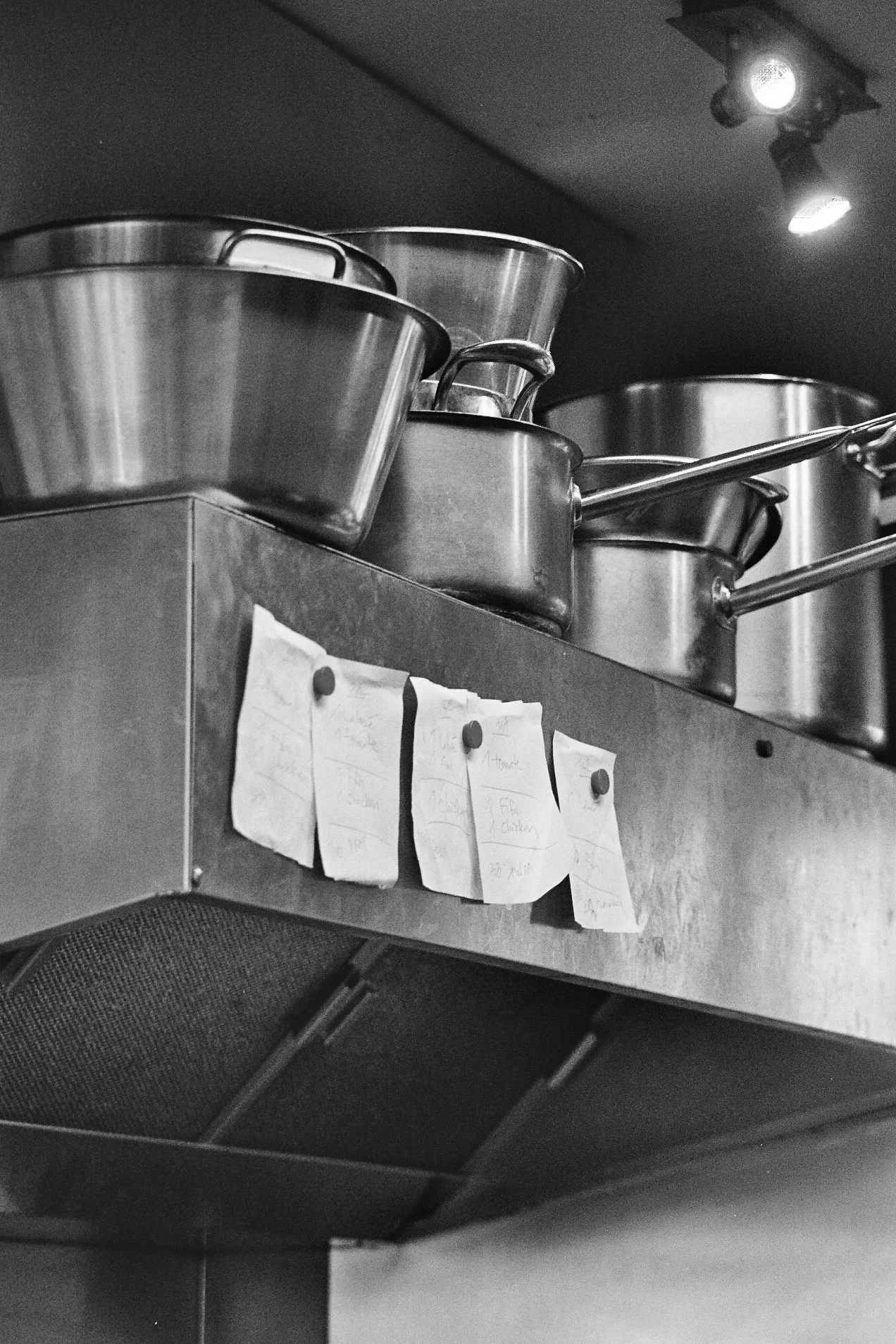
Nestled in the 11th arrondissement with the likes of some of Paris’s most famous wine bars, Mokonuts exists in a time, and a pace, of its own. Here, there’s only two people driving the boat; Omar and Moko, who are also the owners of the restaurant and its offshoots, Mokochaya and Locomal. When you arrive, you’re greeted by Moko herself. That’s if she is not busy running the food to the tables or making dessert in the kitchen. Within a minute, you find yourself sitting down at a table, perusing over the changing menu and acclimating to the sounds of the kitchen, where Omar is always cooking. There’s only one other cook, Mariam, and they have very little conversation amongst each other. They seem to all operate on an unspoken rhythm, that you, as the diner, find yourself falling into once you start tasting the food.
Now, it’s been over a decade of helming this ship together, and the two chefs have much to share about the path they carved to create one of Paris’ most beloved restaurants.
Both of you grew up in your own diasporas, in countries that have problematic histories particularly with people of your heritage. How was that experience growing up, and how did it shape your relationship to Lebanese and Japanese food?
Omar: I was born in Lebanon, and then came to Paris when I was one year old in 1975. Right after the Civil War started. So we basically came to France, initially on holiday. What was supposed to be just a summer, ended up being a lifetime, because we couldn't go back. But I grew up in a very Lebanese family, my parents always spoke to me in Arabic at home. We only ate Middle Eastern food at home, so our Lebanese culture was always very present. Being Lebanese in Paris was always a struggle of trying to retain the culture and the heritage from my parents' perspective, and my siblings and I moving away from it. I was trying so hard to be French when I was a teenager. I didn't want my parents to come and pick me up from school, because I was afraid that they would speak to me in Arabic. Interestingly, it's only after I went to college in the U.S. that I wanted to get closer to my Lebanese roots and relearn how to speak Arabic. I had many international students as friends, as it was very hard for me to integrate into American culture. I relearned my roots, my language, my heritage through them. I'm Muslim, but religion was never something that was imposed on me as a kid, even though my dad was sort of religious.
The way I found my way back to Lebanese food is that eventually, I learned how to cook through what I knew best, which was Lebanese cuisine. I thought I knew how to cook it, but I knew how to eat it. I didn't know how to prepare it. My first introduction to cooking was just making the things that I had seen my dad do. When I went into cooking professionally, I went to the Institute of Culinary Education in New York. I'd say there are maybe elements of Lebanese cuisine in what I do now, but it's very minimal. I say my food now is very much French in technique and very much Mediterranean in character.
Moko: I guess we have a little bit different kind of life experiences, because although I was still born in Japan, we moved to the Bay Area when I was 6 months old. After about five years, we moved back to Japan for a good 14 years, before relocating to the East Coast. For me, Japanese food was always there, but because our family moved around so much, we never felt like our food was “it”. It was never French food or American food or Japanese food, maybe there was a Japanese base to it. When we were in San Francisco, we were a Japanese family amongst all the Americans. When we went back to Japan after 5 years of being in the U.S., we were this weird family that did Christmas and ate bread in the morning. We were more westernized in a way after spending time in America, not necessarily because my parents assimilated, but just because they were more into adding more things in their cultural basket. My mom would take Chinese food lessons in San Francisco, so we ate a lot of different kinds of Americanized Chinese food with my mom's touch. I would say I grew up eating food that has no nationalities. After we moved to the U.S. for the second time, that's when I started appreciating Japanese food more. I would get home and all I wanted to eat was Japanese food, which was never the case when I was a kid. I would ask my mom to make me lasagna or Chinese food or a burger; but then in New York, in my little apartment, all I wanted to cook was Japanese food. When we moved to London, although I was an attorney, I was just literally going through these Kaiseki books whenever I had time and I was cooking the most intricate Japanese meals, because somehow those were the things that I missed.
You met each other while living in New York and you both enjoyed going out to restaurants to try new dishes and cuisines together, which led to Omar making the decision to go to culinary school. How did the multicultural fabric of New York shape that decision?
Moko: I think it did help in a sense that we were exposed to so many different things. We were there at a time when the food scene was flourishing. All these new chefs were becoming popular, Per Se had just opened.
Omar: For me particularly, it exposed me to so many different foods, cuisines and spices, that definitely shaped the way I am now. I’ve always been passionate about “ethnic” food.
Moko: In my case, I caught the bug in Europe, but it was New York that opened my eyes to the fact that this is what I really want to do. We connected mostly through food and doing things that we thought we had in common. We were like, well, maybe we can get along, we can do something with this.
Omar: Like Moko said, there was something about the New York dining scene in the early 2000s, that was just really exciting and superb. The heydays of Per Se, Bouley, Gramercy Tavern… It was just fun. We loved going out and we loved the food scene. It's those experiences that really made us think later on, that this is really what we want to do.
When we came back to France after we got married, although France was my home base, I had to learn how to integrate all over again. I felt like a total foreigner in this country. I knew the language, I had a residency, but everything, to me, was foreign.
Moko: And I think moving countries and changing cultures is one thing, but going into cooking, going into this industry in another country, that's another type of integration. Especially for women, 15-18 years ago, the way restaurant culture was so toxic. It was heavily based on the French brigade system, which is not welcoming for women. At first, I was working in a very Japanese kitchen, which killed me.
Omar: You were supposed to be a certain Japanese person, which you are not. So the French were completely lost. They were like, she's not really Japanese. She's not a cook. She talks, she speaks English, and she asks questions. which you're not supposed to do in the French kitchens at all.
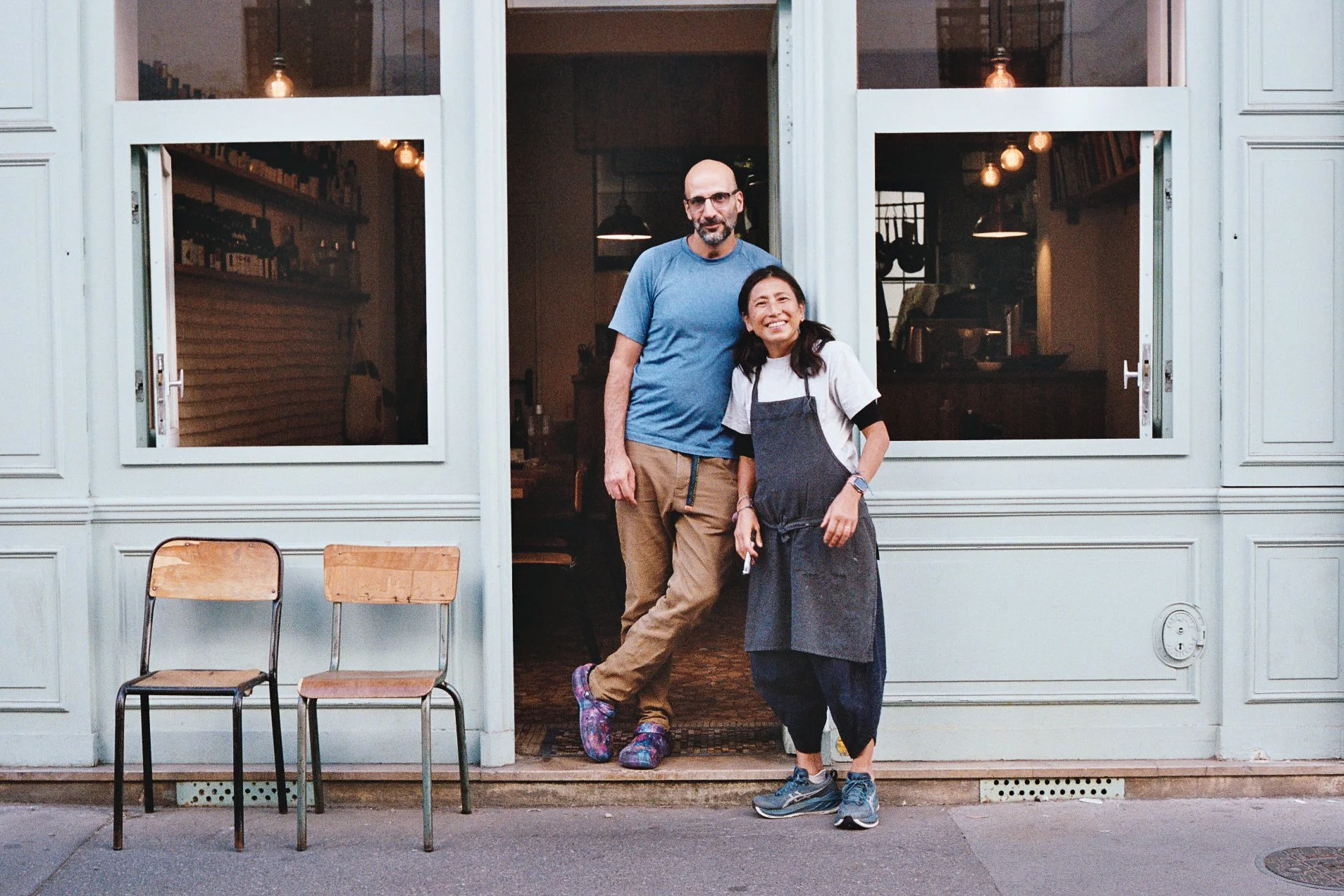
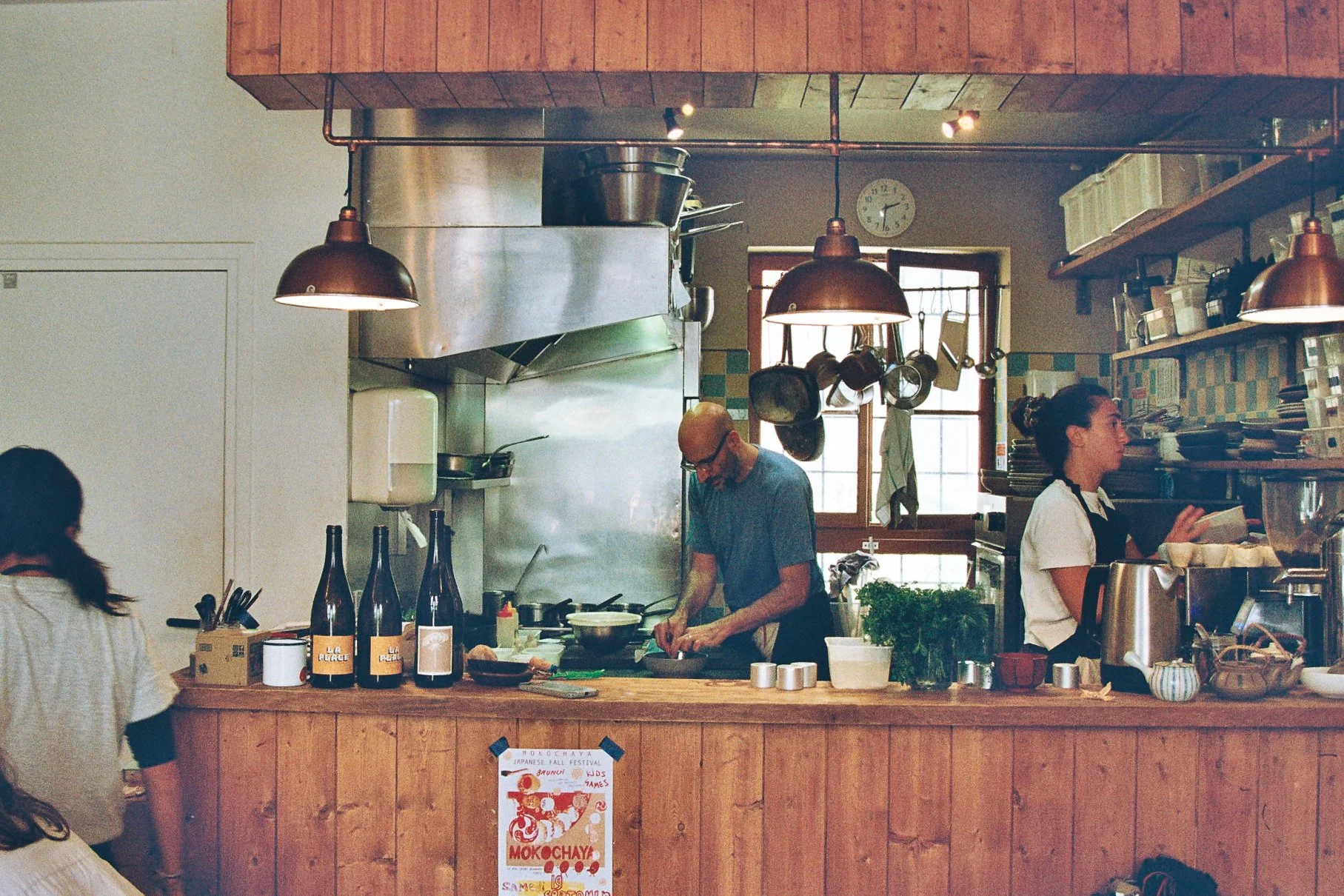
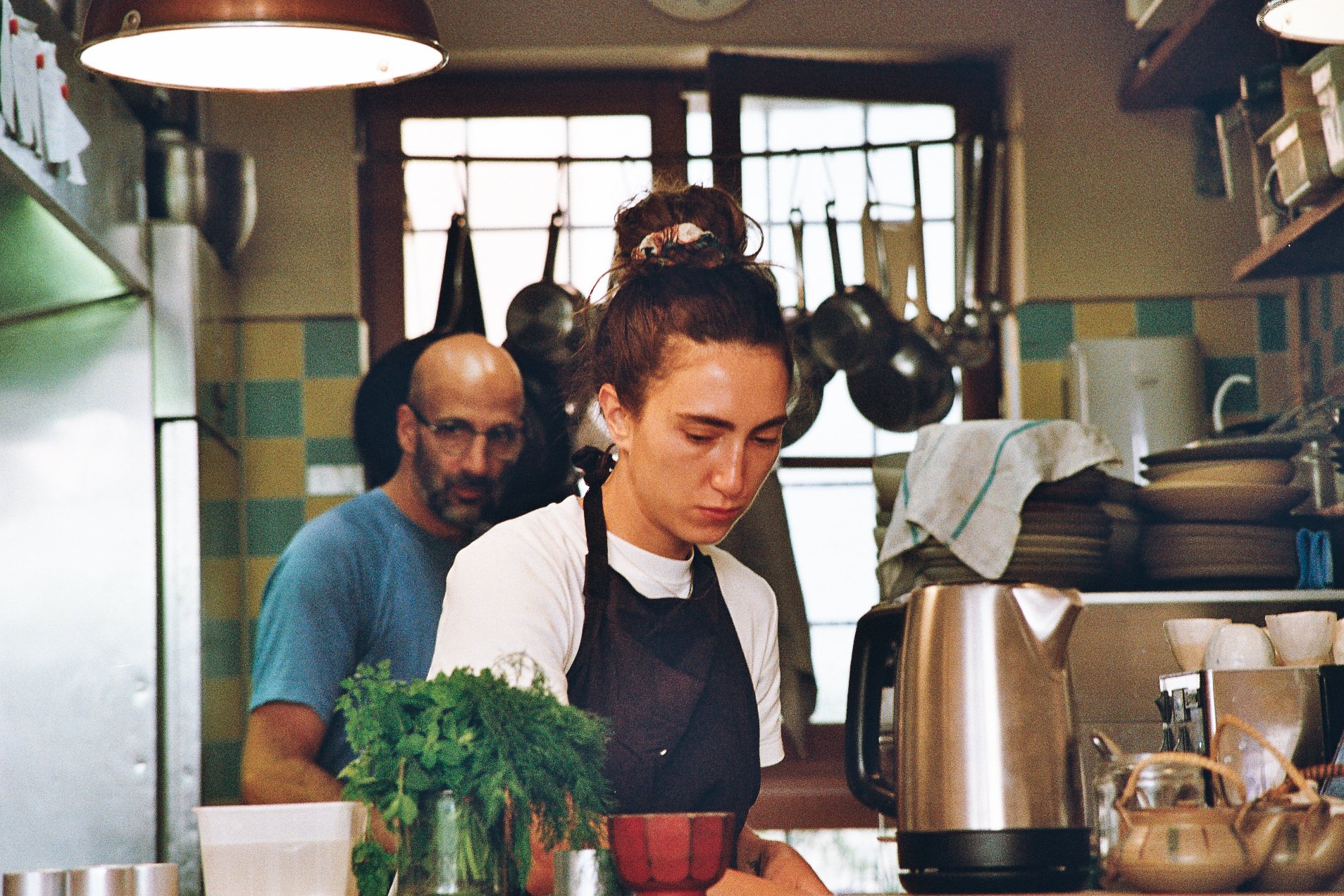
That uniqueness, the characteristic of “not fitting in” is also a huge part of Mokonuts. You have an unorthodox way of operating it - the schedule aggravates a lot of people, especially in this post-internet social media age.
Moko: But it became more of a norm, you know? 11 years ago when we opened, everybody was questioning why we’re closed on Saturdays. Look how many restaurants close on Saturdays nowadays. All these young chefs, they have kids and they decided they can survive even if they close on Saturdays.
Well, they saw that it's doable that you can keep running your business like this. You set an example.
Moko: That’s how we wanted to do it, to make sure that we have a weekend with the kids. At the same time, Saturday was always our backup. So if things don't work out, we know we always have Saturdays to fall back on.
Do you find any joy or accomplishment in making this model work? People think that the hospitality industry owes them their time and attention more than any other customer facing industry, especially at certain times of the year like holiday season.
Omar: We looked into, almost 15 years ago, maybe going back to New York and opening a restaurant there. We quickly dropped the idea because we understood that the economics of having a restaurant in New York is not the same as in Paris. You know, having a restaurant in New York is very expensive. It's a much cheaper and easier process in France. Here, you can allow yourself to open a mom and pop joint, run it just the 2 of us, and make it work, because the finance behind that is not as heavy as it would be elsewhere. In New York, that's almost impossible. When we looked at acquiring a space in New York, again, with that same Lebanese friend that I was roommates with, we were looking at key money, a six month deposit, at least one to two years of construction work... Permits, licenses that can take up to like 6 to like 12 months to acquire. Plus, if we wanted to make it work, we would probably have to open 6 days a week, if not 7 days a week. We would probably have to work lunch and dinner, and we would have no life. Doing that and raising kids is almost impossible. So this is why we decided to stay here, we're very happy with that.
Moko: It's very hard, even when we have a request about doing things on weekends. At first it was very scary to say no. I always thought if I said no, maybe they would never come back. It's like a relationship. But there was a moment that made me think, I'm not gonna go out of my way to miss my kid's birthday to do anyone any favors. In the end, it's okay. They still come back. I think there's a fear of losing the business or losing the relationship by saying no, but the customers respect you more because you actually have a core. That’s something we learned along the way. It's okay to say no, we can't do it because we have other priorities. We don't have to make up excuses.
There's a really nice sense of freedom that comes with being able to say no. And speaking about freedom, Omar, you say that while Lebanese food is partly an inspiration for your dishes, it’s a mix of everything you've experienced and tasted and cooked. This menu has so much freedom in it. In some ways, is that a reaction to the constraints of being an immigrant your whole life? Or an expression of that?
Omar: I'd say that the constraint is more so the nature of the business that we built. Because it's a small kitchen, there's not a lot of ovens. We don't order a lot of produce and we just work with what we have. It’s not really a conscious thing we do. We've obviously traveled to many places, experienced different cultures, eaten many different foods, and have many different passions for many different aspects of cuisines. Maybe it's more of a reaction to the constraints of the restaurant world that we were in.
Moko: We used to follow recipes to the ground!
Omar: I've only worked in very constrained, traditional French kitchens. I went from one to another where we, in a way, always repeated the same thing. Oh, it's April so it’s asparagus season. Let's do asparagus with some kind of egg preparation.
Moko: Even the dessert was always the same. If fall is back, we're going to do quince, we do it exactly the same each year. The thing is, we feel the constraint of the ingredient because that is the season and that is what we have to work with.
Omar: But we don't feel the constraint of what's expected from the customer's point of view. So, yes, we do have asparagus up until May, but we will do it differently each time. I would play around with it, maybe a Mediterranean twist by adding bottarga or adding something that's not really commonly used, like a tonnato sauce, which typically goes on top of veal.
Moko mentions the conversation she had a moment ago at another table during service. The couple has been visiting Mokonuts for six to seven years, but they always happen to be here in the same season. They had the mushroom and egg dish, which they’ve tasted a version of each time they visited. Today, they told her that this one was the best one they had so far. Moko asks Omar with genuine curiosity, “You’ve done chanterelles with egg before, many times. I don’t know what was even different this time.” Omar smiles in agreement, “But it’s the first time I’ve done it this way. I added girolles on top. I’ve never added another mushroom. The bergamot cream too…”
He explains why he made the dish the way he made it today. “It’s simple. I had a lot of mushrooms, and thought I’d better put them on before summer ends and I have no mushrooms. It's just a constraint of what my supplier friend has for me, and it works.”
Moko: Sometimes we’re just kind of trying to figure it out, go with the flow. It’s a lot of patchwork.
Omar: But with the goal of making something good. You know, sometimes even leftovers make great food. We're sort of diner chef-ing a little bit.
Moko: I was always a diner chef! You’re joining my club.
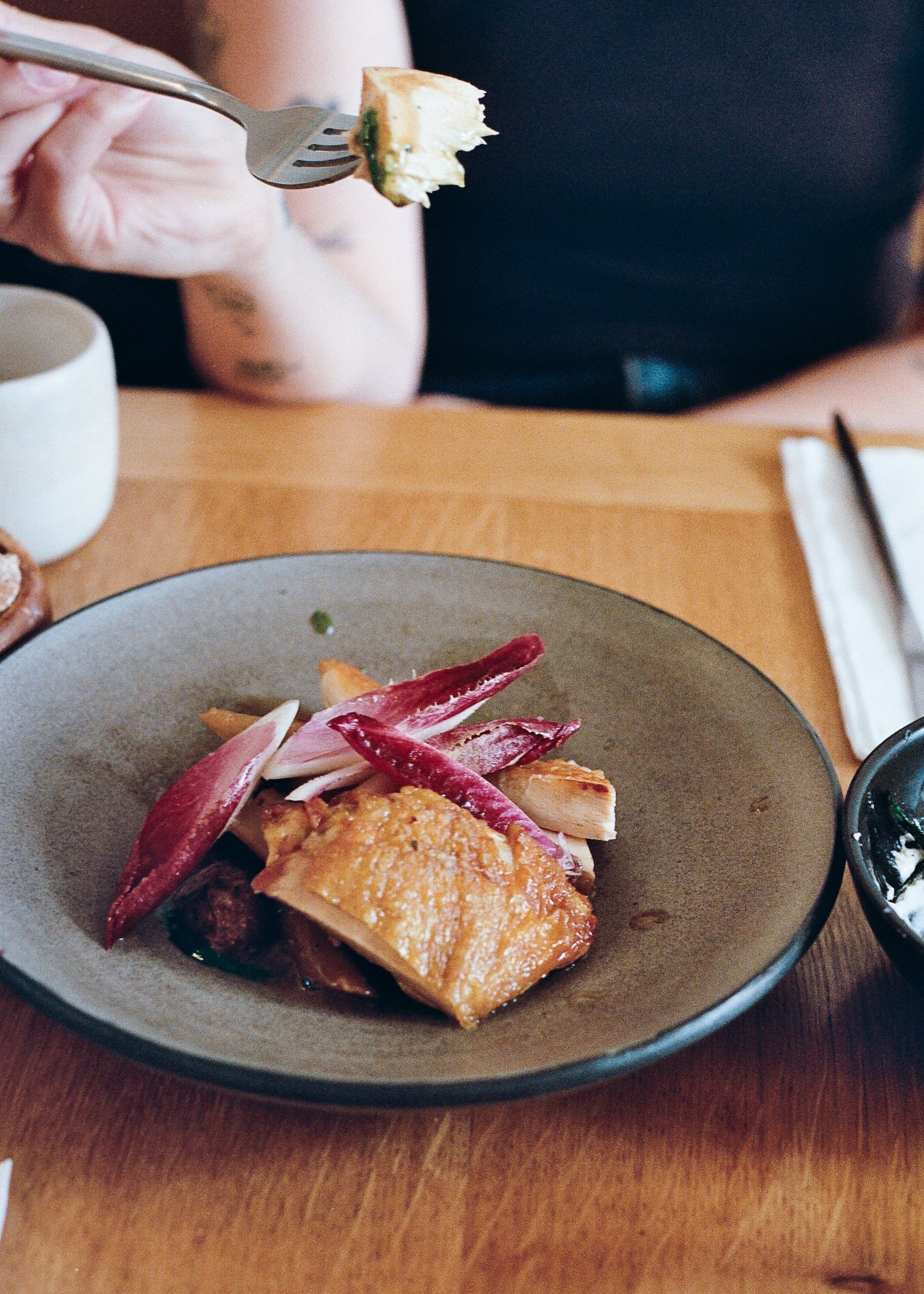
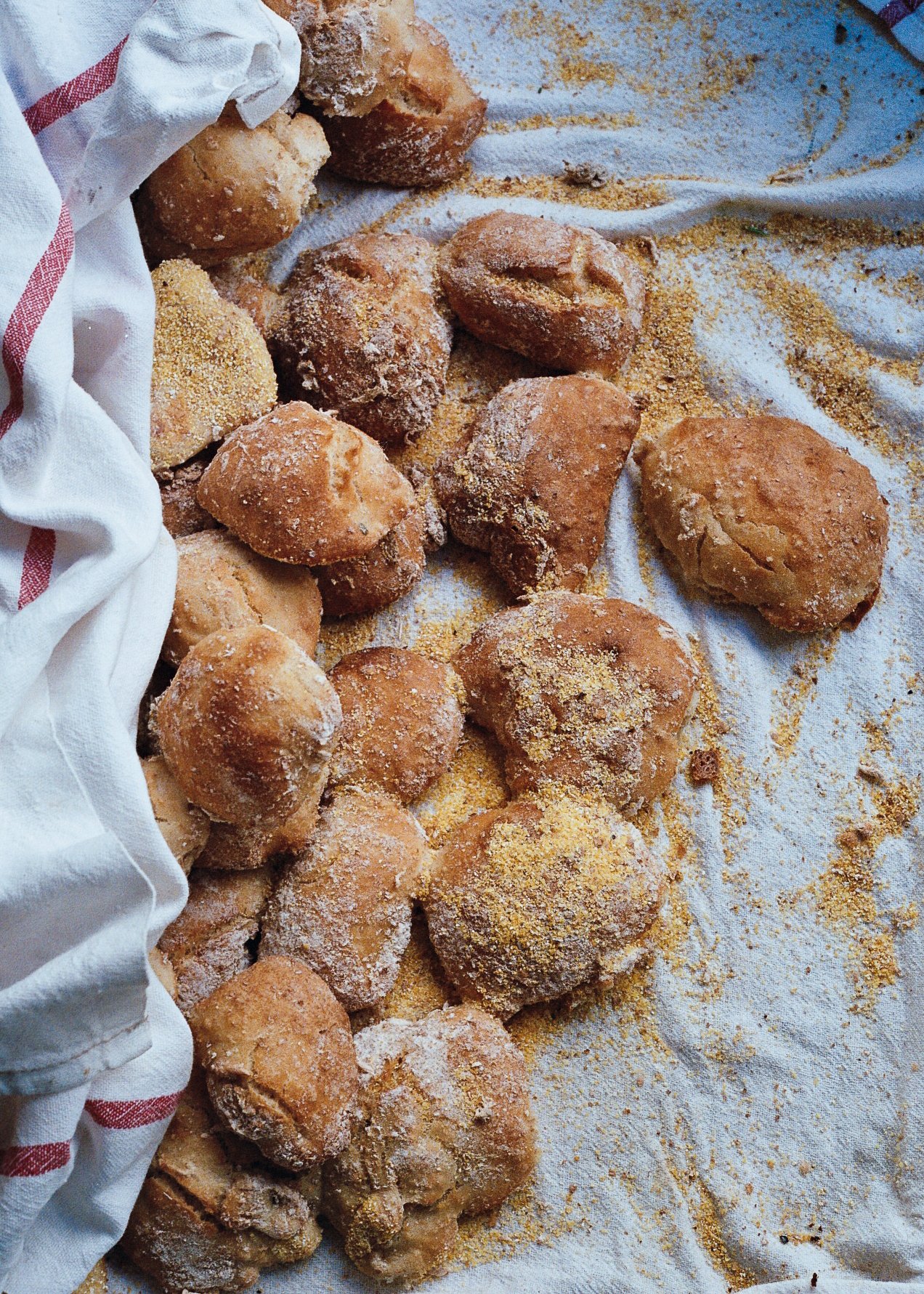
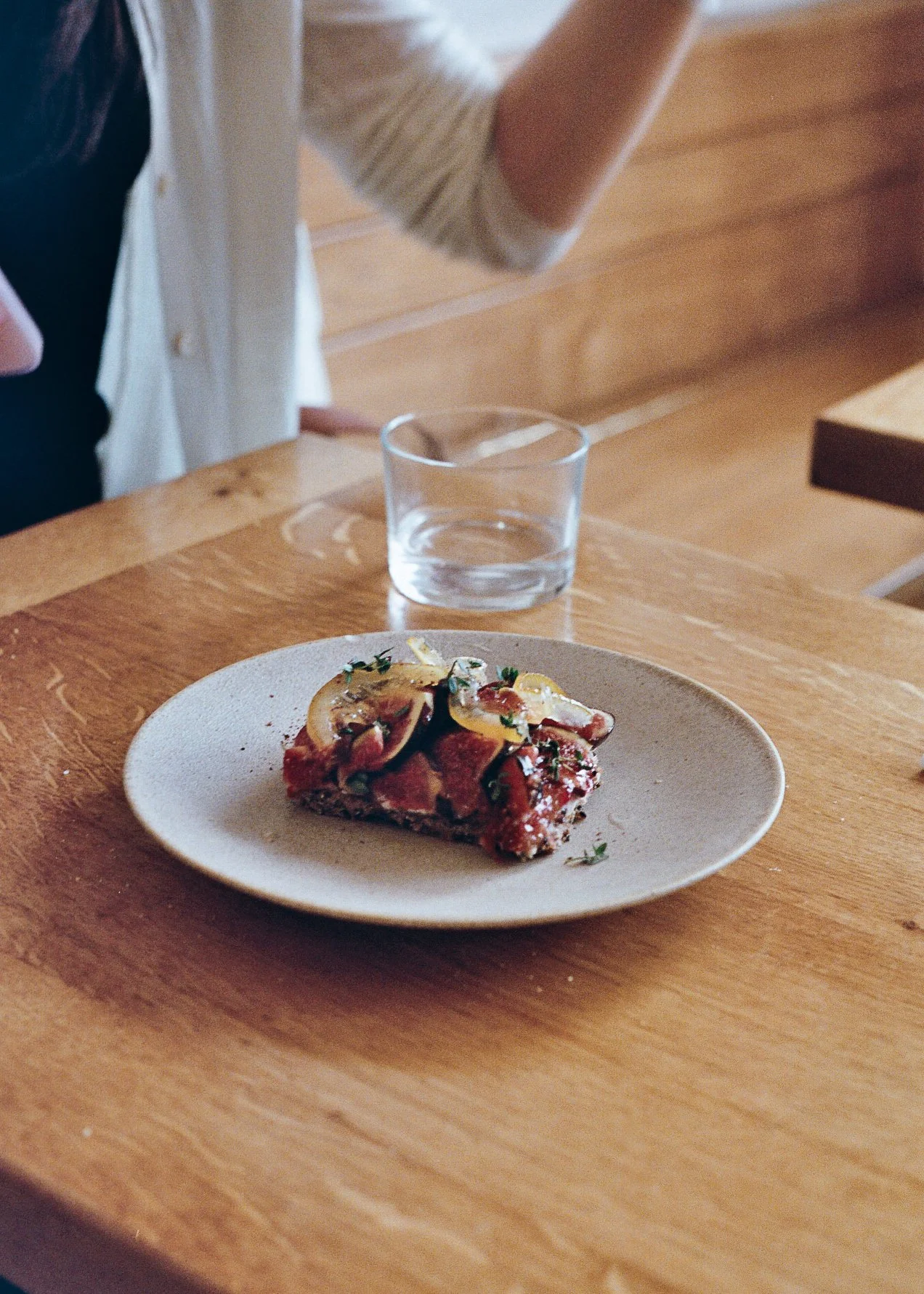
And it's been over a decade of serving this menu that changes almost every day. With your level of popularity also comes vocal criticism. People still comment on platforms like NYT Cooking that “Middle Eastern” food is not a real thing, it’s a gimmick. Has Paris and its community made you feel othered in some ways when you first started this journey?
Moko: The French think slightly differently from the Americans because they like to categorize everything. When it doesn't fit in a box, they're very lost. I'm supposed to be Japanese, but I don’t fit into their typical judgement of a Japanese person, so they get lost. Even to this day, people come and they complain that it's not fusion, it’s not Middle Eastern or Japanese enough.
Omar: Enough is an important word.
Moko: Yes, but we're not even trying 1% to make it Japanese. We never even said it, it just happens that he's Lebanese and I'm Japanese.
Omar: Even at the most recent collaboration dinner we did the other day, they were asking where’s the Lebanese food in this menu? Just labneh, that’s it?
That’s the sort of racism that exists in this space, people are expected to present their culture in very stereotypical ways. If the world operated like that, we wouldn't have any interesting restaurants or any interesting food. Do you think you could make this type of menu work in the U.S.?
Moko: Americans do love to come here, but we're in Paris. Everybody always says, if you do this in the U.S., you'd be successful.
Omar: I tend to think that what attracts at least our foreign crowd to us, to this place, is not necessarily the food. It's more like the controlled, the controlled chaos of this whole place. You've seen what it is during service. It looks like Moko's running around. She's kind of pushing people around, serving water right away. I don't always feel very confident in the open kitchen. I think people are not used to that, you know? Where everything is proper and has a certain etiquette in a restaurant in New York, this is totally the opposite. I think more than the food, people are more attracted to what’s on display.
Moko: If we were to run this kind of service in the America, we would get Google reviewed every single time. I used to think, maybe, but in the past couple of years, I really don't think it would work.
People feel so entitled to you, to your services, and they want you to physically be there, but nothing else. You don't need to be there as a person. And in this restaurant, you guys are both here and present as individuals, which is why people come here to experience that. You only have one restaurant where you’re not physically present during service, the recently opened Locomal, which is a dinner-only Mexican spot. Why did you venture into something uncharted at this moment?
Moko: We still don't know why. It might have been a very bad, bad mistake.
Did it feel less frightening because it's not you cooking there?
Omar: No, it's more frightening because it's not us cooking!
Moko: We got used to the idea of not being there when it was a residency space. It was always a headache because we didn't have control over most of the operational side. The residents there would be very motivated, and they were incredible for a while, until they would start burning out because it's not their own space. So we thought of our dear Jose, who spent over a year with us here. We wanted to work with him and give him a chance to be a permanent chef, to run the place. Maybe we rushed a little bit too quickly by going all the way in. But I've been in love with Mexico since we arrived in America in the 1990s. So having Jose here and getting all excited about Mexican food and his vision, we just said, why not? Let's just give another life to Mokoloco because it was becoming a lot for us to deal with the constant change.
Omar: We also did it because it was with Jose. He's an incredible cook. He's very diligent. We also love Mexican food and we felt that what he could potentially offer to the Paris scene was important, which is totally different from what Paris knows as Mexican food. For example, he makes posole, which I love, and no one else in Paris makes it, you know? It's just that transition is taking a little bit of time and we'll get there. So it's a learning curve.
In that sense then, what does legacy mean to you in terms of the future? Because you've repeatedly shared that things are good the way they are because Mokonuts has stayed in its original form. How do you imagine the legacy you've created here going beyond this kitchen? The book came out, but do you have any future plans?
Omar: We know that we can't do this for too long. We're looking for an exit plan. We're just playing around with a bunch of different ideas.
Moko: Opening Mokoloco was one of the ideas. Opening a Mokochaya was another... That was me going back to my Japanese roots. And here we’re tossing around different ideas to see how we could maintain our passion and the things that we established, but without being tied to this place 24/7, which we are right now.
Omar: We're in our 50s, been doing this for 11 years. Our home economics would say that we would probably have to do this another decade or two because this is what brings the bread and butter to the table. I know that we cannot work the way we work now up until we're past our 60s.
Moko: I think I can keep this going for a really long time. I totally can!
Omar: Well, but your body will probably at one point say you have to stop. I'm not so sure. Mokonuts will stay like this for now, but we're slowly thinking of the transition. We sort of have an idea that we don't want to divulge right now. But Mokonuts will definitely be around for a little while longer.
By the time the clock strikes five, the palpable energy in the room has given way to a calm. Mariam’s already prepping for the next day in the kitchen, and Omar and Moko step outside to take a fresh breath of post-service air.
It’s not surprising that many diners leave Mokonuts feeling like they’ve been given a warm hug. The thank-yous and merci-beaucoups echo in the dining room as you savor the last piece of dessert, and you’re already thinking about the next time you’ll get to have Omar and Moko’s food.