To Beef or
Not To Beef
A Story about East Village’s Two Little Indias
By Ketaki Malaviya
Photography by Sangita Vasikaran
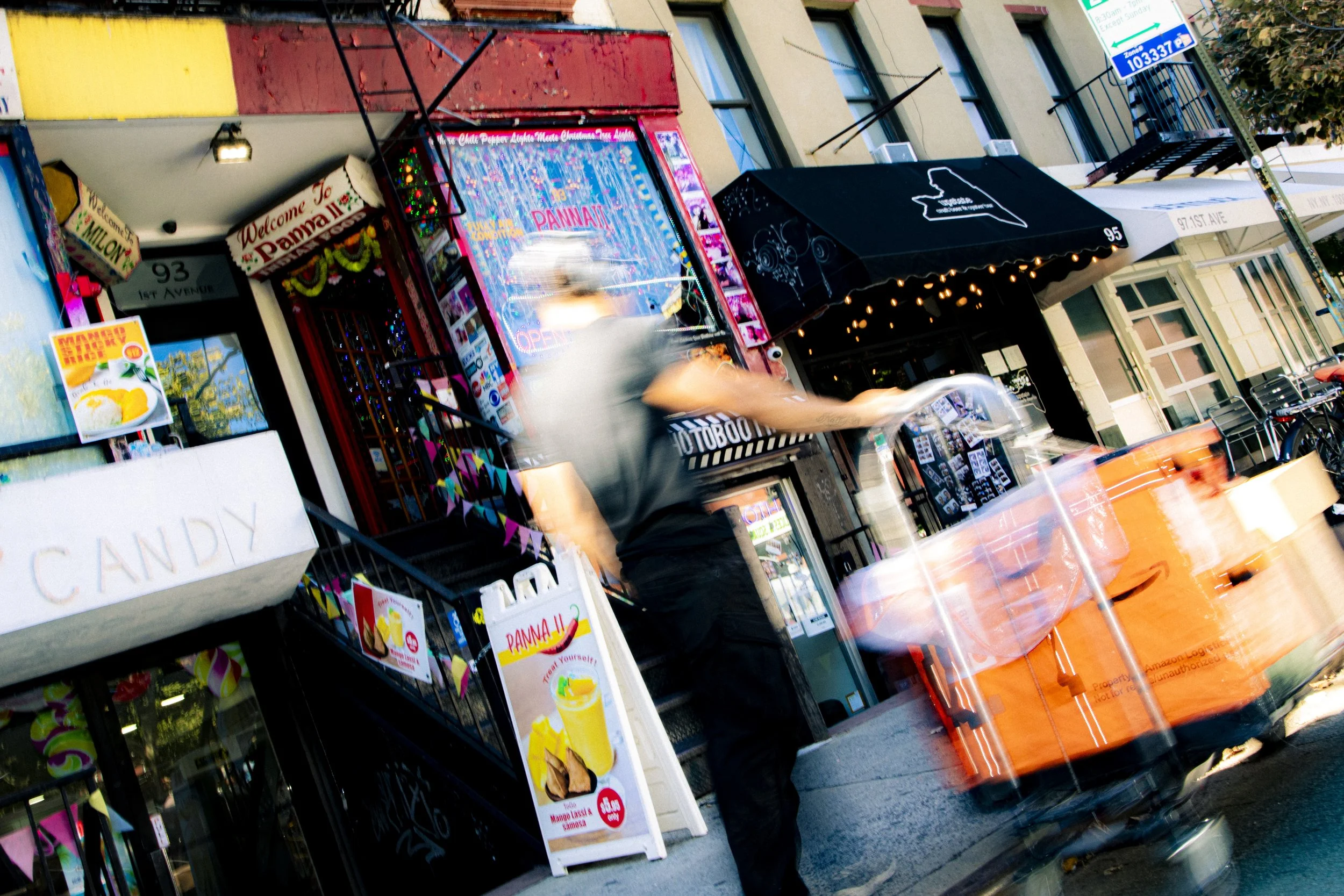
Walk down 6th street in New York’s East Village and every other storefront you see will likely display some combination of the words: curry, masala, flavor, or, spice—the unmistakable signs of a Desi joint. In fact, the block is endearingly referred to as “Curry Row” by New Yorkers, given the historically sheer density of Indian restaurants. In the last two decades, the culinary landscape has changed and while Curry Row’s restaurants still promise a relatively affordable, satisfying meal, New Yorkers are compelled by a new Little India: one that boasts luxury, a fine-dining experience, and an indisputable cosmopolitan charm. This Little India comprises the likes of New York Times’ #1 restaurant, Semma, as well as Mayank Istwal’s Musaafer, and Unapologetic Foods’ Dhamaka. Today, what sets these two “Little Indias” apart is not just the number of dollar signs you’ll see on Google Maps listings, but also the image of South Asia they choose to assert.
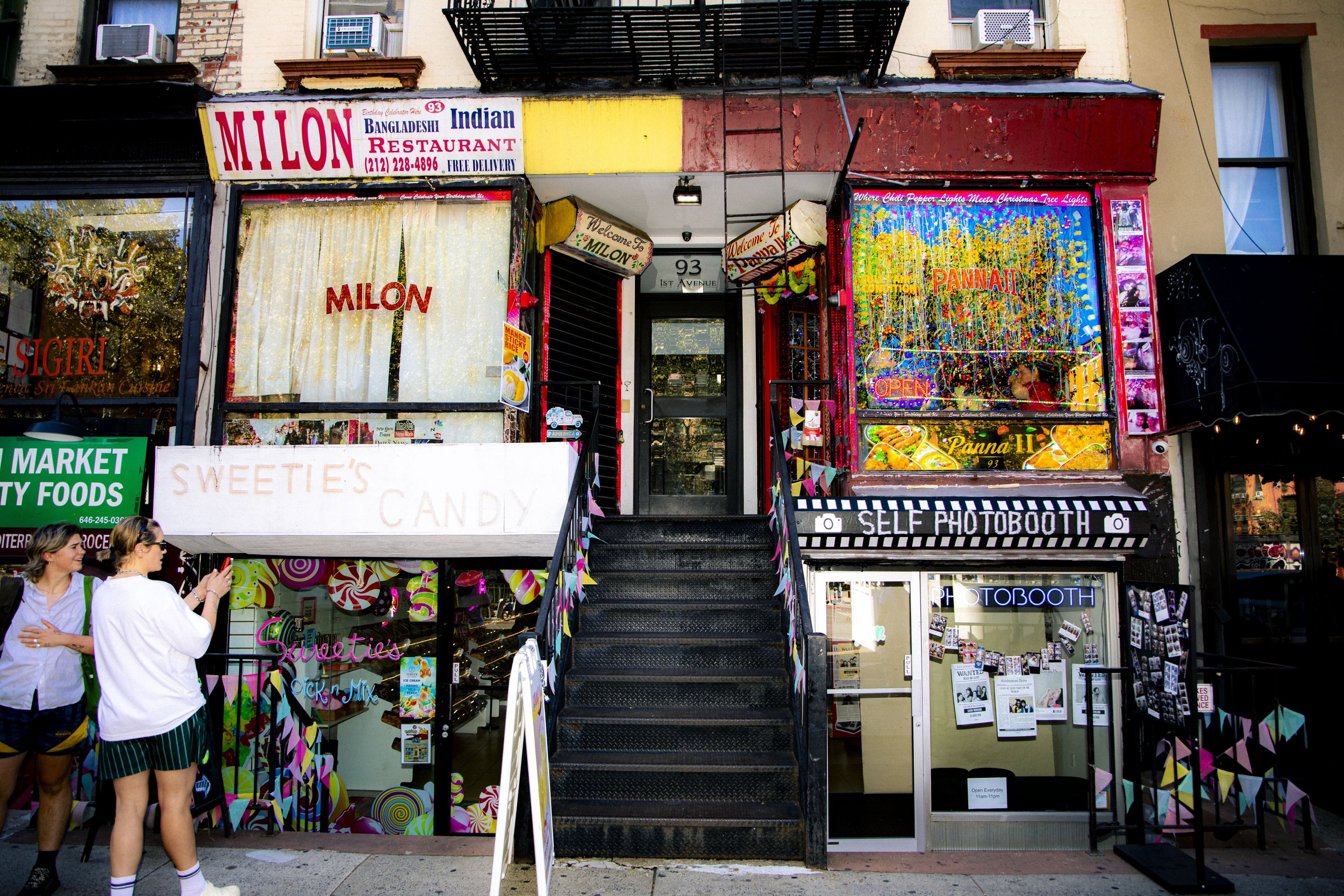
Curry Row was founded almost sixty years ago when Manir Ahmed, an immigrant from the Sylhet region of Bangladesh—then, East Pakistan—yearned for a taste of home. He and his five brothers opened the famous “Shah Bagh” restaurant on 6th street between first and second avenues followed by five more restaurants shortly after, realizing the American Dream and sowing the seeds for a bustling Indian culinary hub. “Home” is a subjective construct—while the Ahmed family was Bangladeshi Muslim, their restaurants were all marketed as “Indian.” In 1960s New York, “Bangladeshi” or “Pakistani” identity may not have held the same cultural capital as “Indian,” the assumed hegemon of South Asian identity.
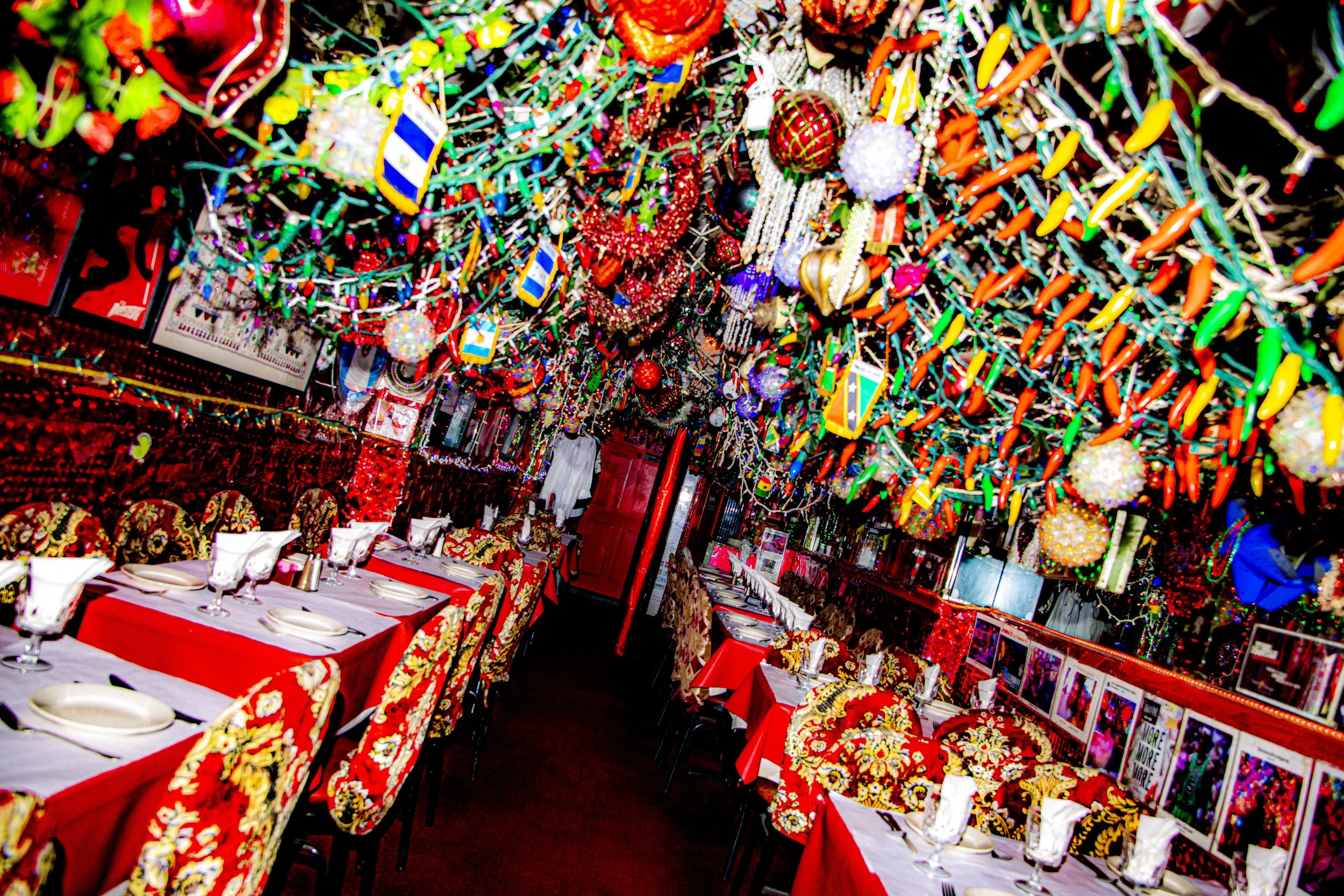
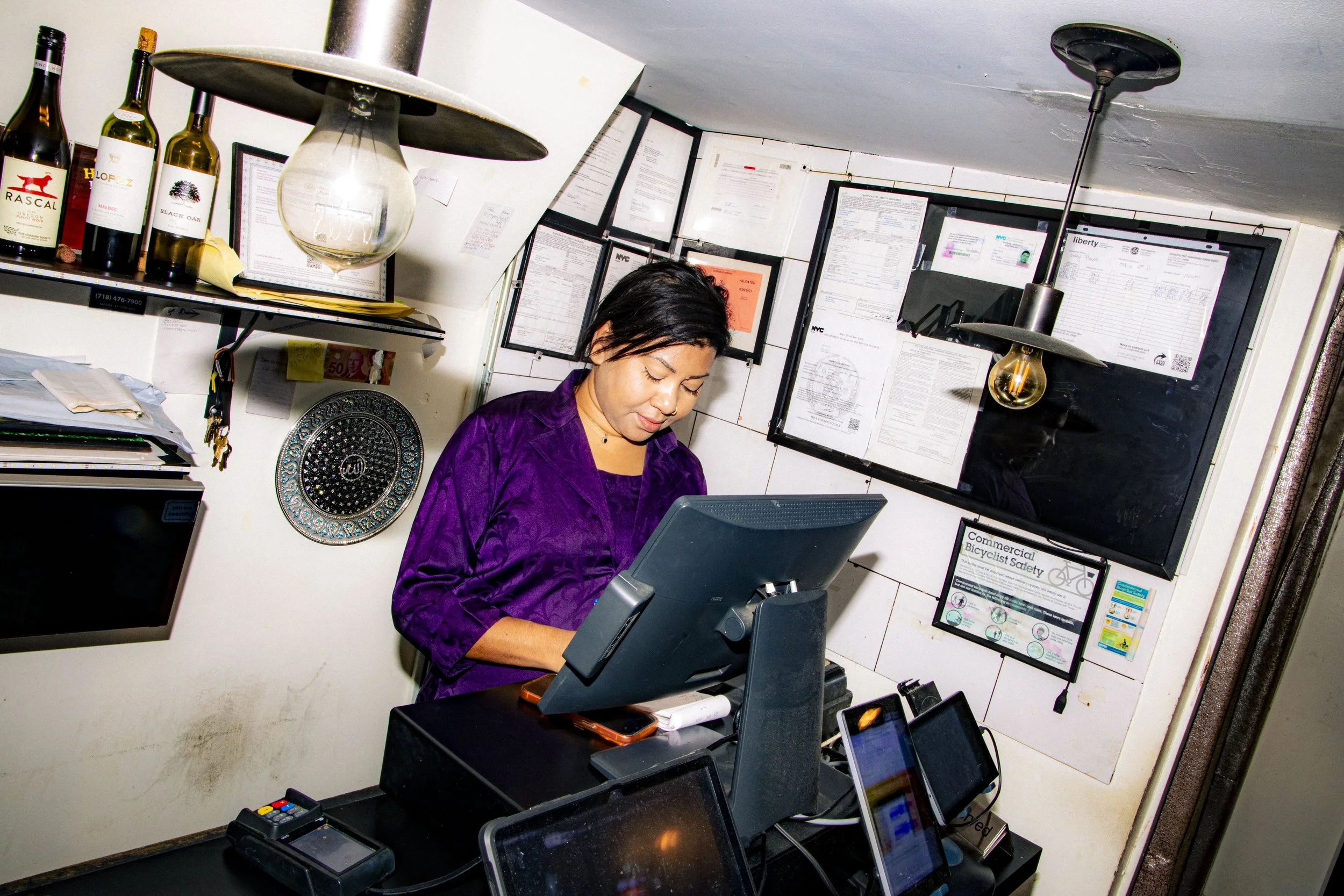
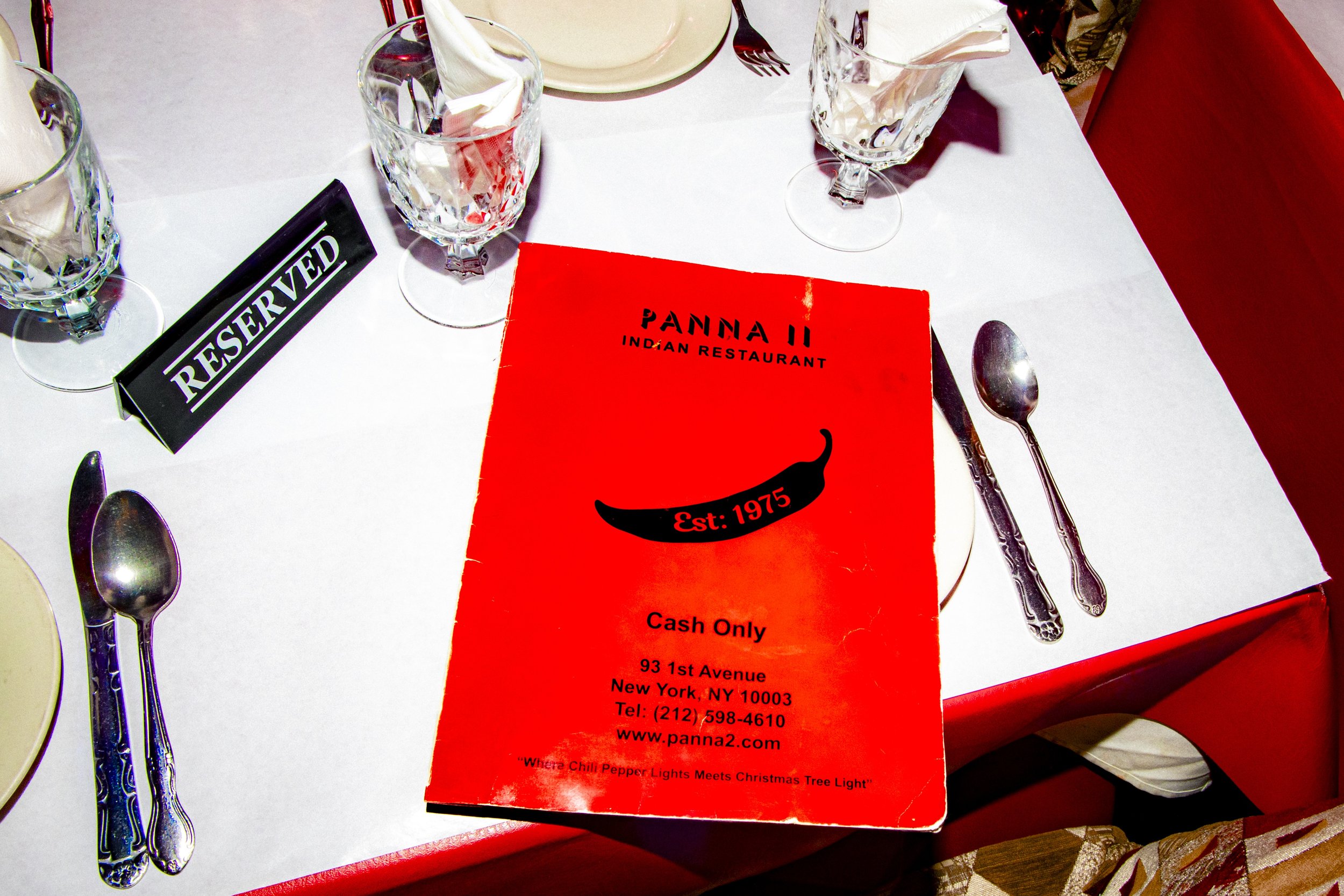
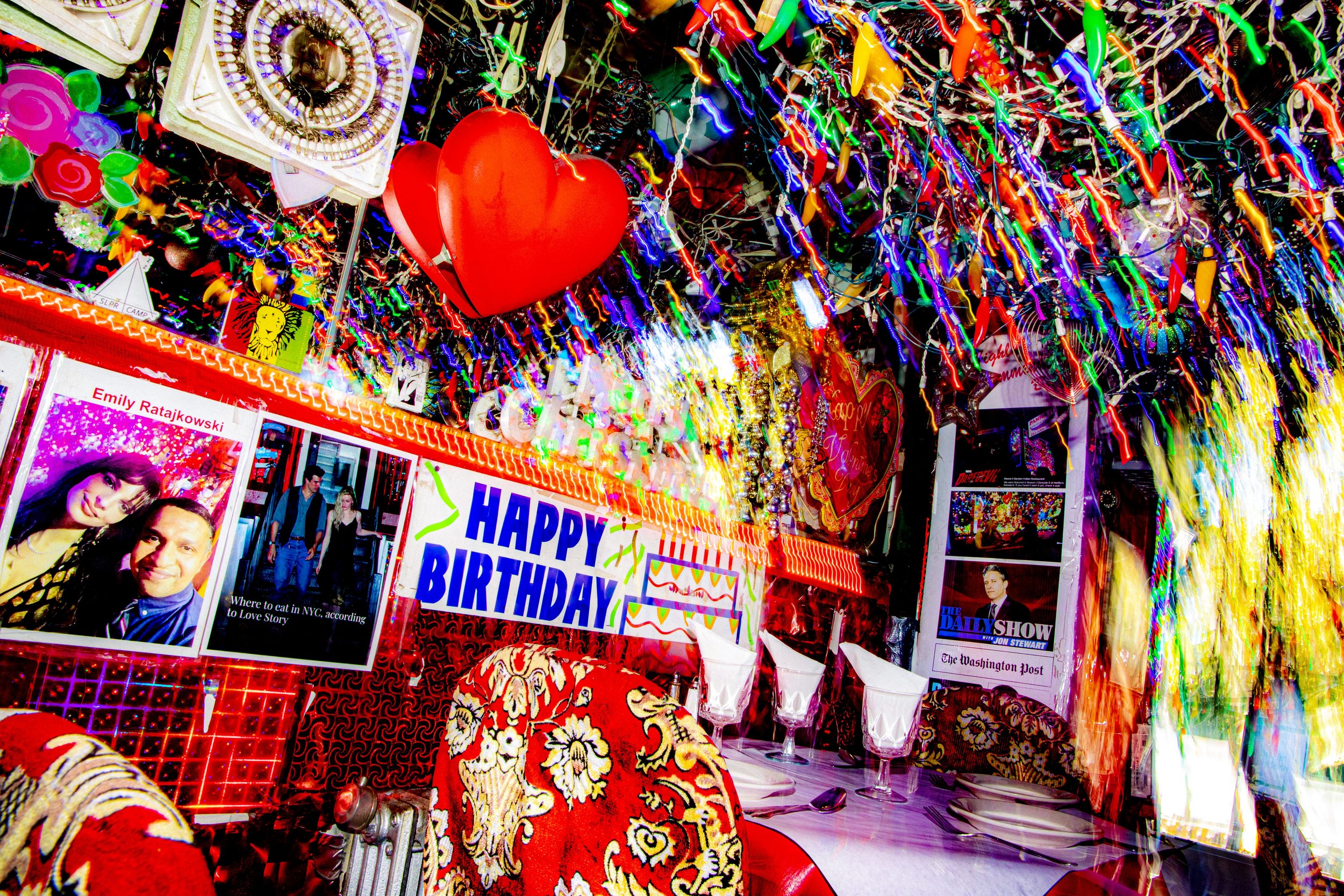
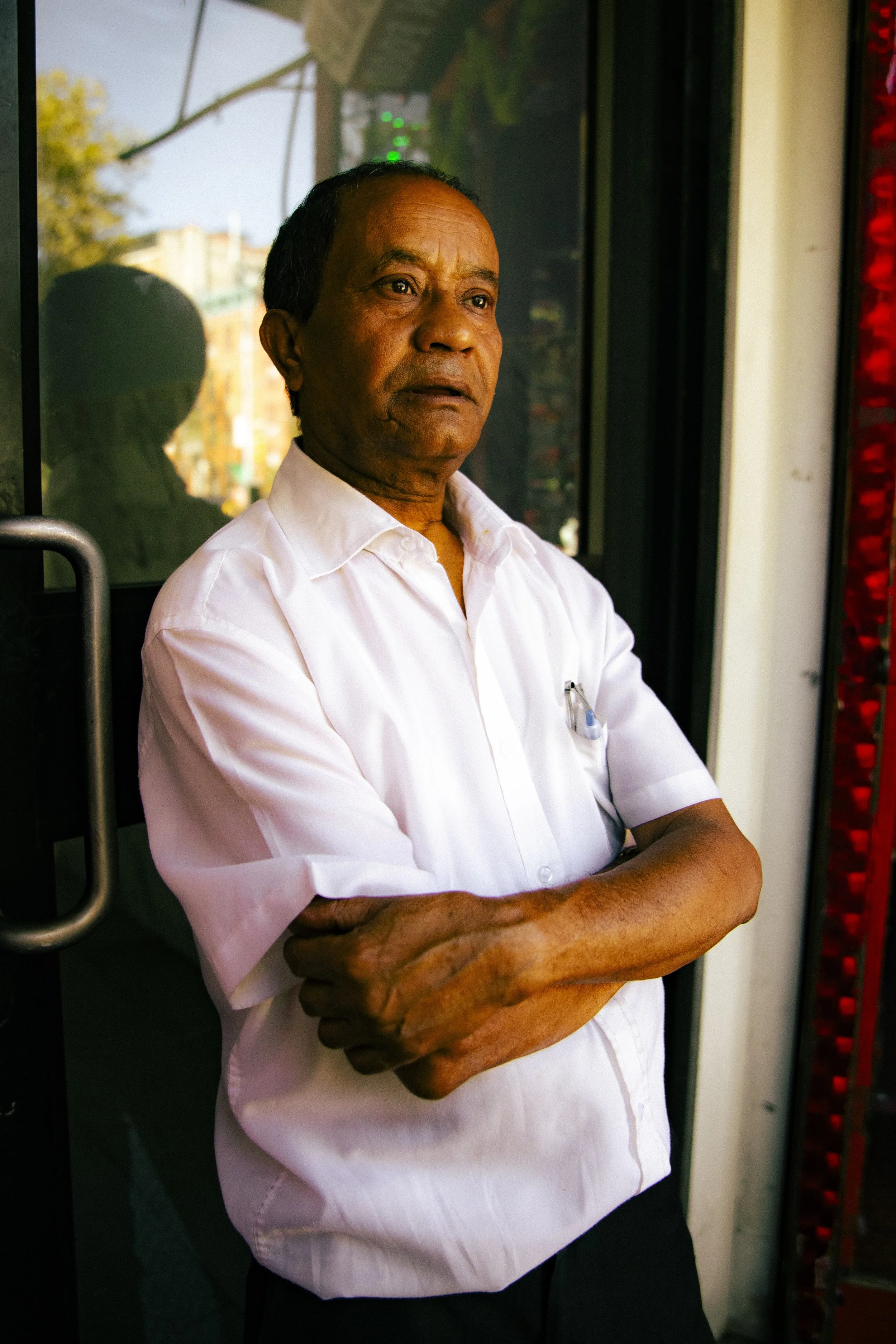
Today’s “Curry Row” is no longer home to its original cast of recognizable names like Shah Bagh, Kismoth, or Romna—even the beloved Milon closed down during the pandemic after a 40 year run—but the historic presence of Indian restaurants has paved the way for relatively new restaurants like “Malai Marke” and “Curry Flavor” to open. Each of these restaurants has a distinct aesthetic. Old Bollywood plays in the background, the tables are reminiscent of a nostalgic 90s optimism, and the walls are decorated with pictures of celebrity visits, revealing an unabashed pride in serving the New York community for decades. The oldest standing restaurant in Curry Row today is Boshir Khan’s famous Panna II Garden Indian Restaurant, widely renowned for their year-round Christmas lights and most recently featured in FX’s Love Story as JFK Jr and Carolyn Bessette’s first date spot. Babu, a beloved waiter at Panna II, beams as he reminisces over the 20 years he has dedicated to the restaurant and how deeply proud he is of the mark he has left on the local community.
If you peruse the menus of Malai Marke or Curry Flavor, both abstain from serving beef, a fascinating choice given how both Bangladeshi and Indian cuisines are full of flavorful beef dishes. Mohammed, the chef at Curry Flavor, which opened in 2023, shared that, “most people know Indian cuisine, not Pakistani or Bangladeshi” revealing the recognizability of “Indian” cuisine especially in the East Village—even though the EV is not a residential ethnic enclave, it has become known as an Indian culinary enclave. These choices were catered towards all New Yorkers’ potential religious preferences—no pork for those practicing Kosher or Halal diets, only Halal meat, and no beef out of respect for Hindu diners, revealing the upper-caste dominance in Hindu-American culinary identity. In that sense, the restaurants serve a broader pan Indian cuisine, with the hopes of reaching a larger audience.
It is a misconception that Indians do not eat beef—Indians, even Hindu Indians, have been eating beef for millennia.The Hindu abstinence from beef is a relatively modern development borne out of societal taboos and caste delineation. Contrary to American misconceptions, in Hindu-American communities, vegetarianism is primarily practiced by those higher in the caste system. The bulk of Indian immigration to America occurred after the 1960s Civil Rights immigration act. Hence, most Indian immigrants came from highly educated, caste and class-privileged households, which set a specific cultural identity for the Indian-American diaspora. Shopkeepers like Mohammed are not misguided in opting out of selling beef dishes or indexing on “Indian” cuisine—for them, it’s simply a business move. The goal of these restaurants is to cater to the multicultural masses in New York City and serve delicious food, even if it’s at the expense of one’s own regional and religious identity.
On the flip side, a completely distinct version of Indian dining coexists in the city. The goal of today’s upscale-dining Indian restaurant is not simply to serve food, it’s to sell an experience—baked into the higher price point. As soon as you enter a restaurant like celebrity Chef Vikas Khanna’s Bungalow, you are transported away from the bustling streets of Manhattan: floor-to-ceiling plant installations line the hallways, decorative art on the walls, and luxury is the name of the game.
Today, Indian-American diners in the City don’t necessarily desire a nebulous projection of home. In pursuit of authenticity, they are more likely to seek specificity and practice granular nutritional preferences, less inclined to follow outdated dietary practices. and with it, the source of cultural capital for restaurants has shifted. Be it a curiosity towards diverse global cuisine or a desire to follow protein-forward diets, younger Indian-Americans have an entirely different approach to food than generations before. This has become especially evident as Indian-Americans assimilate into the American culinary landscape, where luxury meat is still a symbol of status.
Take for example some of the newest fine-dining Indian restaurants of Manhattan, today: Adda (2025), Musaafer (2025), Semma (2021), Kanyakumari (2024), or Lungi (2024). Each chef comes from a Hindu-Indian background, yet each of their restaurants serve a variety of luxurious takes on regional beef dishes, like “Wagyu Bihari Kebab,” “Wagyu Beef Vindaloo,” “Goanese Oxtail,” “Malabar Beef Short-Ribs,” and “Kerala Beef Chukka.” This generation of restaurants have exchanged the stereotypically pious Indian identity for luxury and specificity — where the new currency lies.
While Curry Row’s clientele has now diversified across New Yorkers —college students, pop-culture fans, social media foodies and tourists — the modern fine-diner in Manhattan, likely a cultural omnivore with big pockets, wants to know the specific source of what they eat. Basking in an extravagantly adorned atmosphere with a melodious sitar playing in the background still bears semblance of authenticity for most, reflecting the maximalist grandeur of South Asia.
Despite the changing demographic of the diaspora in New York City, Curry Row will continue to persist, against the backdrop of today’s economy with inflation, steep rent prices and intense competition. It will continue to exist because of what it represents to the people who have worked in them for decades: a source of pride, an opportunity for self-assertion, and a glimmer of hope. It is hard to confine what is truly authentic to Desi culinary identity. Perhaps for many diners and restaurateurs, these spaces’ authenticity lies in the kitsch Christmas lights, the loud decor, and the nostalgia for such a vibrant expression of the American Dream.